By Dog Health Insider Editorial Team · Last updated: June 22, 2026
Some links below are affiliate links. If you buy through them we may earn a small commission at no extra cost to you, which helps fund our independent research.
Dog eye wipes are a quick, gentle way to clear away crust, discharge, and tear stains from the fur around your dog’s eyes. Used the right way, they keep the eye area clean and comfortable as part of a simple grooming routine. This guide explains what eye wipes do, how to use them safely, what to look for, and when a wet eye is a reason to call your vet.
Related guides from Dog Health Insider
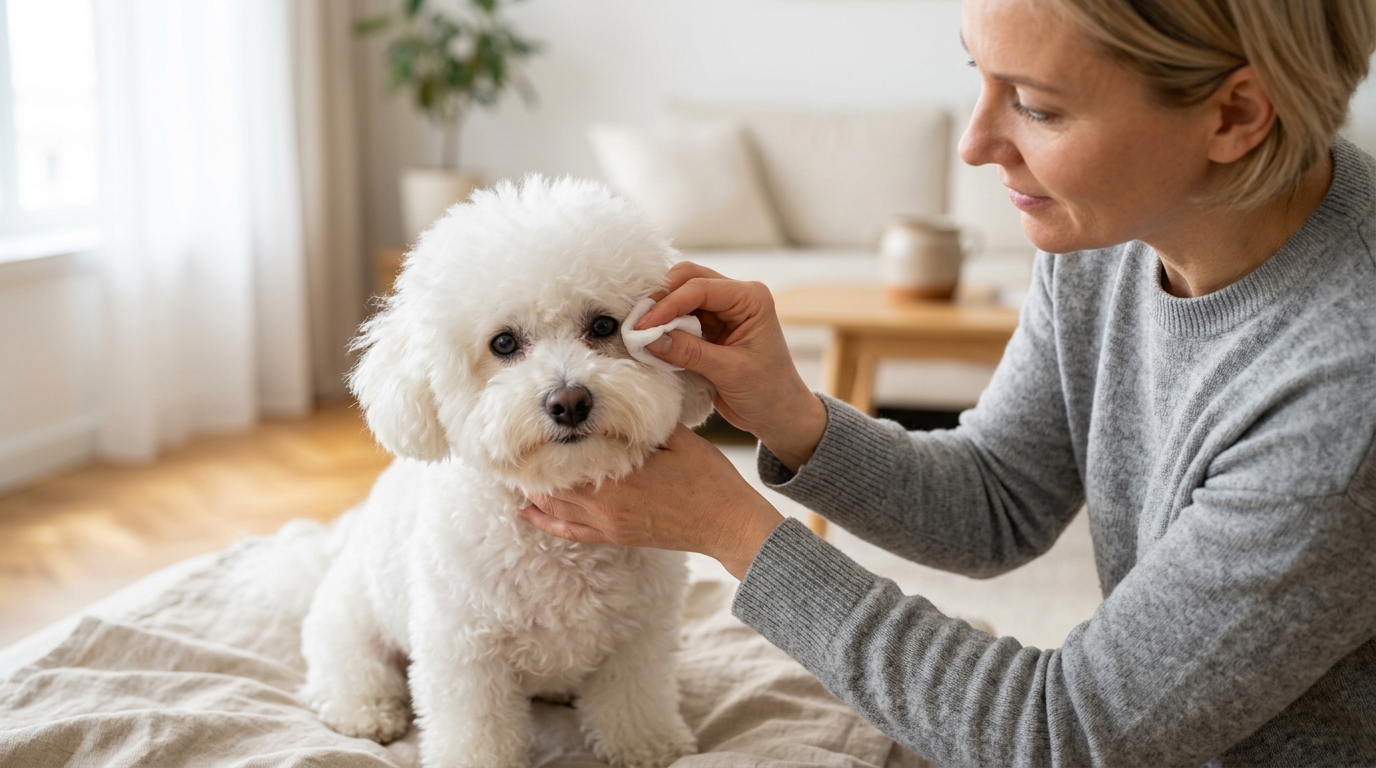
Dog eye wipes are pre-moistened pads made to clean the fur and skin around the eye — never the eyeball itself. Choose a fragrance-free, alcohol-free wipe (or a dog-safe eye rinse) and wipe gently outward, away from the eye, once a day or whenever discharge collects. Wiping helps lift crust and may help reduce tear-stain buildup, but it does not replace a vet visit if the eye looks red, swollen, or painful.
Want a gentler, no-rub option for the eye area?
What this guide covers
- What are dog eye wipes and what do they do?
- Why dogs get eye discharge and tear stains
- How to safely clean your dog’s eyes at home
- What to look for in a good eye wipe (comparison)
- Eye wipes vs. eye rinse
- When to call your vet
- Frequently asked questions
What are dog eye wipes and what do they do?
Dog eye wipes are soft, pre-moistened pads designed to clean the delicate area around the eyes. They help lift away dried discharge (those crusty “eye boogers”), loosen tear-stained fur, and keep folds of skin near the eyes fresh. For flat-faced breeds like Pugs, Shih Tzus, and Bulldogs — and light-coated dogs prone to reddish tear stains — a quick daily wipe can make a real difference to comfort and appearance.
It is important to know what wipes do not do. They are for the fur and skin only, never the surface of the eye, and they are not a medical treatment. For the bigger picture on canine eye health, see our complete guide to dog eye care.
Why dogs get eye discharge and tear stains
A small amount of clear discharge is normal — it is how the eye flushes out dust and keeps itself moist. Tear stains, the reddish-brown marks below the eyes, come from natural pigments called porphyrins in tears. When tears sit on light fur, those pigments oxidize and leave a stain.
Discharge or staining can increase for several everyday reasons:
- Shallow eye sockets and facial folds in flat-faced breeds
- Blocked or small tear ducts that let tears overflow onto the fur
- Allergies, dust, or wind irritating the eyes
- Hair growing too close to the eye
- Teething in puppies, which can briefly increase tearing
Most of this is cosmetic and easily managed at home. But a sudden change in the amount, color, or thickness of discharge can signal a problem. If your dog’s “eye boogers” appeared out of nowhere, our guide on sudden eye boogers in dogs walks through the likely causes.
How to safely clean your dog’s eyes at home
A calm, gentle routine keeps the experience stress-free for both of you:
- Wash your hands and gather a dog-safe wipe or rinse and a soft cloth.
- Soften crust first. Hold a warm, damp cloth against dried discharge for a few seconds so it lifts easily.
- Wipe outward. Using a fresh wipe, stroke gently from the inner corner outward, away from the eye. Use a new wipe or a clean section for each eye.
- Never touch the eyeball. Clean only the surrounding fur and skin.
- Dry the folds. Pat damp skin folds dry to discourage staining and odor.
- Reward your dog so the next session is easier.
For loose debris in the eye area, a dog-safe cleansing rinse can flush gently before you wipe. You can also trim long hair around the eyes (or ask a groomer) to keep the area cleaner. For dryness or specific concerns, talk to your vet about dog eye drops rather than reaching for a human product.
What to look for in a good dog eye wipe
The eye area is sensitive, so ingredients matter. A good wipe or rinse should be:
- Fragrance-free and alcohol-free, to avoid stinging or irritation
- Free of harsh preservatives and artificial dyes
- Soft and lint-free, so fibers do not catch near the eye
- pH-appropriate and made specifically for dogs
Avoid human baby wipes and makeup-removal pads. Many contain ingredients that are fine for human skin but can irritate a dog’s eyes. Here is how the common cleaning options compare.
| Option | How it helps | Best for | Watch-outs |
|---|---|---|---|
| Pre-moistened dog eye wipes | Lift crust and stained fur quickly | Daily upkeep, travel | Check for fragrance and alcohol |
| Dog-safe eye cleansing rinse | Flushes loose debris gently before wiping | Tear-prone and flat-faced breeds | Pair with a soft cloth to dry folds |
| Cotton pad + warm water | Softens and removes light discharge | Budget, occasional cleaning | Use lint-free pads; one per eye |
| Human baby wipes | Not recommended for the eye area | — | May contain irritants; avoid near eyes |
Pure Majesty Pets Daily Eye Cleansing Rinse
A soothing, fragrance-free rinse formulated to support a clean, comfortable eye area and help maintain tidy, stain-free fur. Gentle enough for daily use on tear-prone and flat-faced breeds — flush, then wipe the folds dry.
Eye wipes vs. eye rinse: which is better?
They do slightly different jobs, and they work well together. Wipes physically remove crust and stained fur from around the eye, while a rinse flushes loose debris from the eye area without rubbing. Many owners get the best results by rinsing first to loosen and flush, then using a wipe or soft cloth to clean and dry the surrounding fur.
- Choose wipes for fast daily touch-ups and travel.
- Choose a rinse for tear-prone or flat-faced dogs that need gentler, no-rub cleaning.
When to call your vet
Cleaning helps with everyday discharge and staining, but some signs need professional care. Call your vet promptly if you notice:
- Green or yellow pus-like discharge
- Redness, swelling, or a cloudy eye
- Squinting, pawing at the eye, or sensitivity to light
- A sudden jump in tearing or discharge
These can point to an eye infection or injury that wiping cannot fix. Our guide to dog eye infections explains the warning signs in more detail.
Frequently asked questions
Are baby wipes safe for dog eyes?
No. Human baby wipes can contain fragrance, alcohol, or preservatives that irritate a dog’s eyes. Use a wipe or rinse made specifically for dogs, or plain lint-free cotton with warm water.
How often should I wipe my dog’s eyes?
Once a day is enough for most dogs, plus a quick wipe whenever discharge collects. Flat-faced and tear-prone breeds often need it more often.
Do dog eye wipes remove tear stains?
Regular gentle wiping lifts the discharge and may help reduce the reddish-brown staining over time, but it does not change the underlying cause. Heavy, persistent staining is worth discussing with your vet.
Can I use eye wipes on the eyeball itself?
No. Wipes are for the fur and skin around the eye, never the eye surface. For the eye itself, use only a dog-safe eye rinse and avoid touching the cornea.
What is the difference between eye wipes and an eye rinse?
Wipes physically remove crust and stains from the surrounding fur, while a rinse flushes loose debris from the eye area. Many owners use a rinse first, then a wipe to clean and dry the fur.
When should eye discharge worry me?
Green or yellow pus, squinting, redness, swelling, pawing, or a cloudy eye are reasons to call your vet promptly rather than just cleaning at home.
A note from our team: This article is for general educational purposes only and is not a substitute for professional veterinary advice. Always consult your veterinarian about eye discharge, irritation, or any change in your dog’s eyes, especially if symptoms appear suddenly.
Sources
- American College of Veterinary Ophthalmologists — Common Eye Conditions in Pets
- American Kennel Club — How to Clean a Dog’s Eyes
- Merck Veterinary Manual — Eye Disorders of Dogs
- American Animal Hospital Association (AAHA) — Routine Pet Eye Care
Related articles
- Complete Guide to Dog Eye Care
- Why Does My Dog Have Eye Boogers All of a Sudden?
- Dog Eye Infections: Signs & Care
- Dog Eye Drops: A Buyer’s Guide
Keep the eye area clean and comfortable
A gentle daily rinse supports a clean, tidy eye area for tear-prone and flat-faced dogs.
Related reading: Wiping after every walk matters most during pollen season — see dog eye allergies for the full routine.
Wipes handle routine hygiene, not structural problems — a prolapsed gland needs a vet. See cherry eye in dogs.