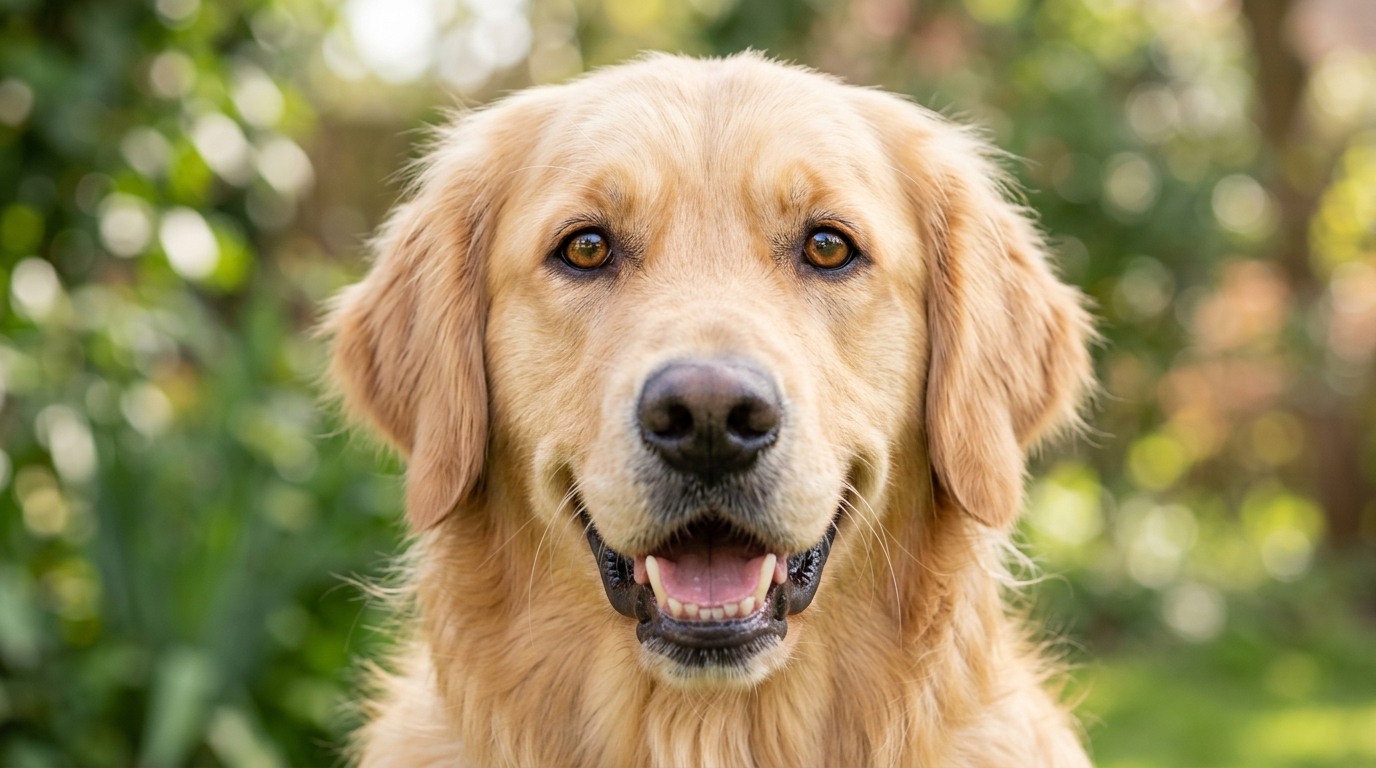
Dog eye care is mostly maintenance: a daily look, gentle removal of normal discharge from the corner of the eye, and a low threshold for calling the vet when something changes. Eyes are the one area where waiting is genuinely risky — a painful or cloudy eye can lose vision in days, so the useful skill is telling routine tear staining apart from the handful of signs that mean same-day attention.
Quick answer
Small amounts of clear or slightly brown crust in the inner corner each morning are normal. Wipe it away with a sterile, dog-safe eye rinse or a damp pad, working from the inner corner outward, one fresh pad per eye. Yellow or green discharge, squinting, redness, cloudiness, pawing at the eye or a visibly enlarged eye are veterinary problems, not cleaning problems — and a squinting dog should be seen the same day.
What’s in this guide
- What normal dog eyes look like
- Why daily eye care matters
- Causes and risk factors
- Signs to watch for
- Eye care options, ranked by evidence
- The safe at-home routine
- Ingredients explained
- Tear stains specifically
- Cost and time expectations
- Common owner mistakes
- When to see your veterinarian
- FAQ
What normal dog eyes look like
A healthy dog eye is clear and bright, with white sclera, a black or dark pupil that responds to light, and pink — not red — conjunctival tissue at the inner rim. Both eyes should look the same. Symmetry is the single most useful thing an owner can check, because most serious eye problems start in one eye.
Tears are produced continuously to keep the cornea lubricated and drain through small openings in the inner corner of the eyelids into the nose. Overnight, some tear film, dust and shed cells collect at that inner corner and dry into a small crust. That is normal. It is the same reason people wake up with sleep in their eyes.
| Feature | Normal | Concerning |
|---|---|---|
| Discharge | Small, clear or grey-brown, morning only | Yellow, green, thick, or increasing through the day |
| Whites of the eye | White with fine visible vessels | Pink, red, or bloodshot |
| Cornea | Clear and glossy | Cloudy, blue-grey, dull, or with a visible dent |
| Eyelids | Open evenly, both sides equal | Squinting, held shut, swollen, or drooping |
| Behaviour | Indifferent to gentle handling | Pawing, rubbing on furniture, avoiding light |
| Third eyelid | Barely visible | Prominently raised across the eye |
Why daily eye care matters
Two reasons, and neither is cosmetic.
The first is that dried discharge left on the fur below the eye holds moisture against the skin. That damp fold is a comfortable place for yeast and bacteria, and it is why chronically weepy dogs often develop sore, smelly skin under the eye rather than a problem with the eye itself.
The second is early detection. If you look at your dog’s eyes properly every day, you notice a change on day one instead of day five. With corneal ulcers, that difference genuinely matters — an ulcer that is straightforward on Monday can be deep and sight-threatening by Friday.
Causes and risk factors
| Factor | Why it raises risk |
|---|---|
| Flat-faced (brachycephalic) breeds — Pugs, Shih Tzus, Bulldogs, Boxers | Shallow sockets, prominent eyes, incomplete blinking, more corneal exposure and trauma |
| Long-haired and light-coated breeds — Maltese, Bichon, Poodle | Hair contacting the cornea; tear staining is highly visible |
| Blocked or narrow tear ducts | Tears spill onto the face instead of draining; Merck covers this under nasolacrimal disorders |
| Allergic disease and environmental irritants | A common cause of conjunctivitis in both eyes |
| Dry eye (keratoconjunctivitis sicca) | Reduced tear production, thick sticky discharge, real risk of corneal damage |
| Eyelid abnormalities (entropion, ectropion, distichiasis) | Lashes or lid margin rub the cornea continuously |
| Foreign material — grass seed, sand, dust | Sudden one-sided squinting and watering |
| Age | Lens changes, and higher rates of glaucoma and cataract in some breeds |
A useful diagnostic clue from the Merck Veterinary Manual: conjunctivitis in one eye often points to a foreign object, tear sac inflammation or dry eye, while conjunctivitis in both eyes is more commonly infectious or allergic. That distinction is worth mentioning to your vet.
Editor’s pick
Pure Majesty Pets Soothing Daily Eye Cleansing Rinse
A gentle daily rinse formulated to help maintain clean, comfortable eyes and the skin folds beneath them. Designed for routine hygiene in breeds prone to tear staining and daily discharge — supporting normal eye-area cleanliness rather than replacing veterinary treatment when something is actually wrong.
Signs to watch for
Same-day veterinary signs
- Squinting or holding an eye closed — in dogs, this means pain
- A cloudy, blue or hazy cornea
- A visibly bulging or enlarged eye
- Yellow or green discharge
- Pawing or rubbing the eye persistently
- Sudden bumping into things, or reluctance to move in dim light
- Blood in or around the eye, or an obvious injury
Book an appointment soon
- Redness that lasts more than a day — see eye allergies vs infection
- A change in the amount or colour of discharge — our guide to dog eye discharge breaks down what each type suggests
- Discharge that appears suddenly when there was none before, covered in sudden dog eye boogers
- Thick, sticky, ropey discharge, which can indicate reduced tear production
- New tear staining in a dog that never had it
For the full symptom picture of an infected eye, read dog eye infection, and for everyday crust our explainer on dog eye boogers covers what is and is not normal.
Eye care options, ranked by evidence
| Approach | Evidence and veterinary position | Use it for |
|---|---|---|
| Veterinary exam with fluorescein stain and Schirmer tear test | Strongest. Merck lists tear testing and conjunctival sampling as standard for a specific diagnosis | Any painful, red, cloudy or discharging eye |
| Prescription topical medication | Strong, but condition-specific. Merck notes a topical antibiotic may be prescribed where mucopurulent discharge is present | Diagnosed conditions only |
| Sterile saline or a dog-formulated eye rinse | Good and low-risk for flushing debris and daily hygiene | Routine cleaning, dust, mild irritation |
| Dog eye wipes | Good for the fur and skin around the eye | Crust and tear-stain area, not the eyeball |
| Trimming hair around the eyes | Sensible mechanical fix | Long-coated breeds |
| Oral tear-stain supplements containing antibiotics | Not advisable. Antibiotic use for cosmetic staining is inappropriate and drives resistance | Avoid |
| Human eye drops, including redness relievers | Avoid without vet approval. Some are actively harmful in dogs | Nothing |
If you are comparing products, our reviews of dog eye drops, eye drops for dogs and dog eye wipes go through what is available over the counter and what genuinely needs a prescription. We also examined one popular veterinary-channel brand in our Optixcare review.
The safe at-home routine
- Look before you touch. Both eyes, in good light, from the front and the side. You are checking symmetry, clarity and comfort.
- Soften first. Hold a warm damp pad against dried crust for 15–20 seconds. Never pick at hardened discharge — you will pull skin and hair.
- Rinse if needed. A dog-formulated eye rinse or sterile saline can be dripped into the eye to flush dust. Do not touch the bottle tip to the eye.
- Wipe inner corner outward. Use a fresh pad for each eye so you never carry anything from one eye to the other.
- Dry the fold below the eye. This is the step most people skip, and it is the one that prevents sore skin.
- Trim carefully. Blunt-nosed scissors, and only with a second person holding the dog if you are not confident. A groomer is a reasonable alternative.
- Protect on car journeys. Heads out of windows cause corneal injuries.
Do this once daily for flat-faced and long-coated breeds, and every few days for everyone else.
Check price on the Eye Cleansing Rinse
Ingredients explained
| Ingredient | Role | Notes |
|---|---|---|
| Purified water and buffered saline | Base; matches the eye’s natural salt balance | Isotonic formulas sting far less |
| Boric acid / sodium borate | Mild buffer used in eyewashes | Common and well tolerated at eyewash strength |
| Hyaluronic acid | Holds moisture at the ocular surface | Comfort ingredient in lubricating products |
| Aloe or chamomile extract | Soothing | Only at low, ophthalmic-appropriate concentration |
| Preservative-free single doses | Reduces irritation risk | Preferable for frequent or long-term use |
| Tetrahydrozoline / naphazoline (human redness drops) | Constrict blood vessels | Do not use in dogs without veterinary direction |
| Tylosin and other antibiotics in stain powders | Suppress tear-staining bacteria | Inappropriate for cosmetic use |
Tear stains specifically
The reddish-brown colour in tear stains comes from porphyrins, iron-containing pigments excreted in tears and saliva. They are harmless in themselves; they are simply very visible on white fur, and they darken with light exposure.
What actually reduces staining is reducing wetness: keeping the area clean and dry, trimming hair that wicks tears onto the face, and — crucially — having a vet check whether there is a treatable reason for excess tearing, such as a blocked duct, an inward-turning eyelid or a lash rubbing the cornea. No topical product fixes a mechanical cause. We compare what is on the market in dog tear stain remover and the best tear stain removers for dogs.
Cost and time expectations
| Item | Realistic expectation |
|---|---|
| Daily eye check and wipe | Under a minute per dog |
| Eye rinse or wipes | Roughly $10–$25, typically 1–3 months |
| Vet eye exam | Consultation plus fluorescein stain and tear test where indicated |
| Visible improvement in skin under the eye | 1–2 weeks of consistent daily drying |
| Existing tear stains fading | Stained fur usually has to grow out — weeks to months |
| A corneal ulcer | Often improves within days on correct treatment; delay is what causes complications |
Common owner mistakes
- Using human eye drops. Redness-relief and medicated human drops can be harmful in dogs. Plain sterile saline is the only safe assumption, and even that is worth checking.
- Waiting on a squint. A squinting dog is a painful dog. This is the single most under-reacted-to eye sign in general practice.
- Picking dry crust. Soften it first, always.
- One pad for both eyes. A reliable way to move an infection across.
- Treating tear stains as the disease. The staining is a symptom of excess tearing; find out why.
- Reusing old prescription drops. Steroid drops in an eye with an ulcer can be seriously damaging. Never reuse without a fresh exam.
- Ignoring one-sided changes. Asymmetry is the highest-value warning sign you have.
- Letting dogs hang out of car windows. Grit at speed causes corneal trauma.
When to see your veterinarian
Same day for squinting, a held-shut eye, cloudiness, a bulging eye, visible injury, sudden vision loss, blood, or intense pawing at the eye. Any of these can threaten sight.
Within a few days for persistent redness, coloured discharge, new or increasing tearing, thick sticky discharge, or swelling of the lids.
Discuss at the next routine visit long-standing tear staining, mild morning crusting that has not changed, or whether hair around the eyes should be trimmed or professionally managed for your dog’s breed.
If your dog is a brachycephalic breed, ask your vet at the annual check whether a tear test should be part of the routine. Early detection of reduced tear production is far easier to manage than the corneal damage it causes.
View Pure Majesty Pets Eye Cleansing Rinse
Frequently asked questions
How do I clean my dog’s eyes safely at home?
Soften any dried crust with a warm damp pad for 15 to 20 seconds, then wipe from the inner corner outward using a fresh pad for each eye. If you need to flush debris, use sterile saline or a rinse formulated for dogs, keeping the bottle tip away from the eye surface. Finish by drying the skin fold beneath the eye, which is what prevents soreness.
Can I use human eye drops on my dog?
Not without veterinary approval. Plain sterile saline eyewash is generally the only human product considered low-risk, and even that is worth confirming. Human redness-relief drops and medicated drops can be harmful to dogs, and using a steroid drop in an eye with an undiagnosed ulcer can cause serious damage.
What does the colour of my dog’s eye discharge mean?
Clear or slightly grey-brown crust in the morning is usually normal tear film debris. Watery discharge often reflects irritation or excess tearing. Thick yellow or green discharge suggests infection and warrants a veterinary appointment, and the Merck Veterinary Manual notes a topical antibiotic may be prescribed where mucopurulent discharge is present.
Why does my dog have tear stains?
The reddish-brown colour comes from porphyrins, iron-containing pigments in tears. The stain itself is harmless, but it indicates the fur is repeatedly wet. Common reasons include narrow or blocked tear ducts, hair contacting the eye, eyelid conformation and allergy, so a vet check for a treatable cause is more useful than any topical product.
My dog is squinting. Is that an emergency?
Treat it as urgent. Squinting in a dog signals eye pain, and the common causes include corneal ulcers, foreign bodies and glaucoma, all of which can threaten vision quickly. Book a same-day appointment rather than watching it overnight, and do not put any drops in beforehand unless your vet tells you to.
How often should I clean my dog’s eyes?
Daily for flat-faced breeds and long-coated white breeds prone to staining, and every few days for most other dogs. The daily look matters as much as the wipe, because noticing a change early is the main protective effect.
Is conjunctivitis in dogs contagious to people?
Most causes of canine conjunctivitis, such as allergy, irritants and dry eye, are not transmissible to humans. A small number of infectious causes have some cross-species relevance, so sensible hygiene applies: wash your hands after handling an affected eye and use a fresh pad for each eye.
Can eye problems in dogs cause blindness?
Yes. Untreated glaucoma, deep corneal ulcers and some inflammatory conditions can cause permanent vision loss, sometimes within days. This is why the eye is one area where prompt veterinary assessment consistently beats waiting to see whether it settles.
Sources
- Merck Veterinary Manual. Disorders of the Conjunctiva in Dogs (Dog Owners). merckvetmanual.com
- Merck Veterinary Manual. The Conjunctiva in Animals. merckvetmanual.com
- VCA Animal Hospitals. Conjunctivitis in Dogs. vcahospitals.com
- American Kennel Club. Dog Eye Infections: Symptoms, Causes, and Treatment. akc.org
Veterinary disclaimer
Dog Health Insider publishes educational content for dog owners. It is not veterinary advice, and no article here is a substitute for an in-person examination. We do not have a veterinarian on staff. Always talk to your own veterinarian before starting, stopping or changing anything in your dog’s care, especially if your dog is on medication, pregnant, or has a diagnosed condition.
Affiliate disclosure: some links on this page go to Pure Majesty Pets, and we may earn a commission if you buy through them. This never changes what we recommend or what the research says.
Last updated: August 5, 2026 · Author: Dog Health Insider Editorial Team
Related reading: Related: dog eye allergies — symptoms, triggers and safe at-home relief.
A sudden pink lump in the inner corner of the eye is a prolapsed third-eyelid gland — see our full guide to cherry eye in dogs for causes, treatment and what to do first.
Wondering whether your dog has pink eye (conjunctivitis)? Our dedicated guide covers the causes, red flags and safe at-home care.
A painful, cloudy, squinting eye is an emergency: see our full guide to the dog eye ulcer.
Regional guide: dog eye drops in the UK.