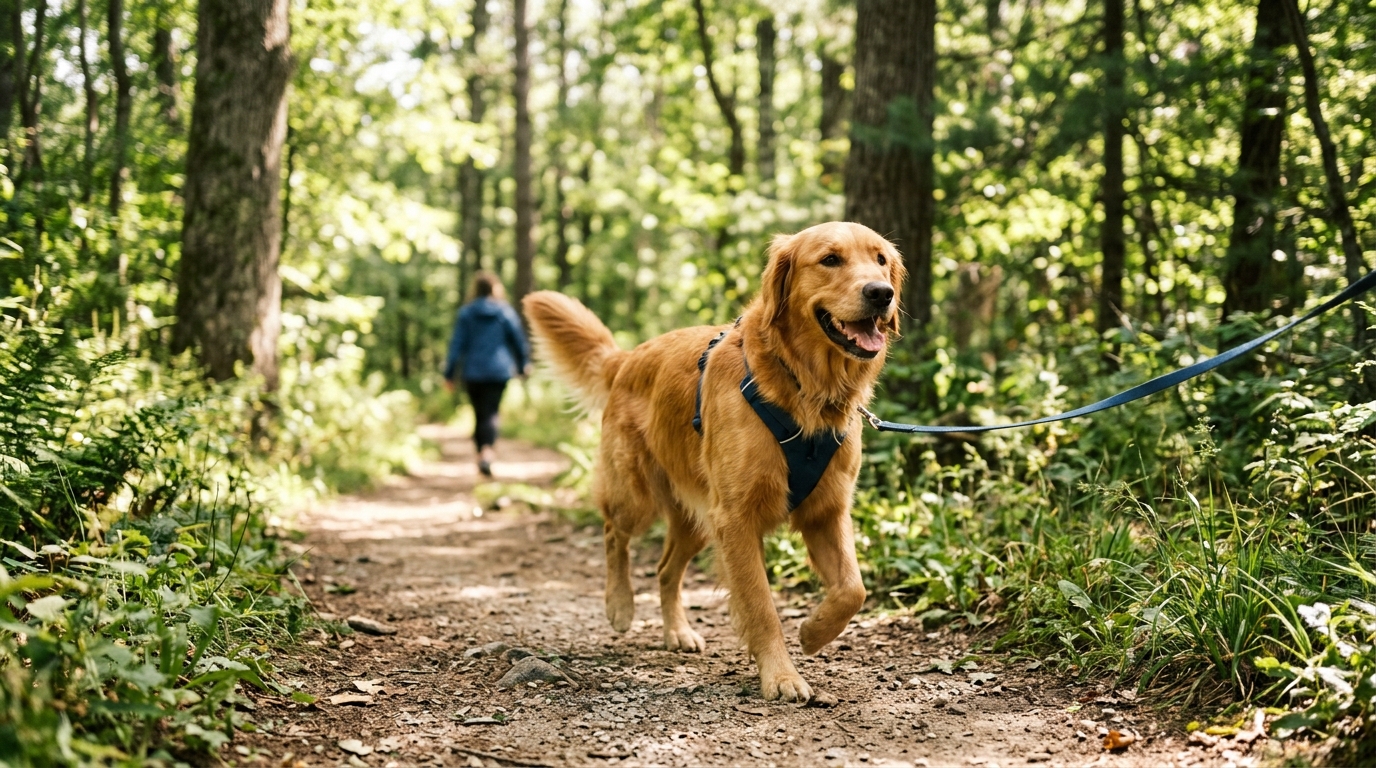
Dog joint supplements are a long-game tool: the ingredients with the strongest evidence in dogs are omega-3 fatty acids, and the best results come from combining a supplement with weight control and sensible exercise rather than expecting a chew to do the work alone. Most owners should plan on six to twelve weeks before judging whether a product is helping.
Quick answer
Omega-3 fatty acids (EPA and DHA) have the most consistent published support for canine joint comfort and mobility. Glucosamine and chondroitin have a much weaker evidence base on their own, which is why most credible formulas combine them with omega-3s, green-lipped mussel, MSM and turmeric rather than relying on them alone.
The three things that matter most: keep your dog lean, keep him moving with low-impact daily exercise, and give the supplement consistently for at least 8 weeks before deciding.
Multi-pathway daily joint support
Pure Majesty Advanced Hip & Joint Chews combine glucosamine and chondroitin with the ingredients that carry stronger evidence — formulated to support comfort and mobility every day.
On this page
- What joint supplements are meant to do
- Why joint health matters earlier than owners think
- Causes and risk factors
- Signs to watch for
- The options, ranked by evidence
- A safe at-home routine
- Ingredients explained
- Cost and realistic timelines
- Common mistakes owners make
- When to see the veterinarian
- FAQ
What joint supplements are meant to do
Canine osteoarthritis is a progressive degeneration of joint cartilage accompanied by low-grade inflammation, bone remodelling and pain. Cartilage has no blood supply and very limited capacity to repair itself, so once the surface degrades it does not regrow. Nothing you buy over the counter rebuilds a worn joint.
What a supplement can realistically do is more modest and still worthwhile: support the joint’s normal inflammatory balance, help maintain the viscosity of joint fluid, supply building blocks for connective tissue, and support comfortable movement. Owners typically notice the difference not as a dramatic change but as a dog who gets up faster, hesitates less at the stairs, and is less stiff the morning after a long walk.
The Merck Veterinary Manual notes that joint fluid modifiers such as glucosamine have received extensive attention but that robust supporting evidence remains limited, with many reports regarded as anecdotal. That is an honest starting point, and it is why the ingredient stack matters more than any single hero ingredient.
Why joint health matters earlier than owners think
Osteoarthritis is usually framed as a senior problem. In practice the joint changes begin years before the limp does. A dog with hip or elbow dysplasia has abnormal joint loading from puppyhood; a dog who tore a cruciate ligament at four has measurable arthritis in that stifle long before he is old.
Dogs also hide it well. Rather than limping, they shift weight, shorten their stride, stop jumping onto the sofa, and slow down on walks — changes owners routinely file under “he’s just getting older.” By the time there is an obvious limp, the process is usually well established.
The practical consequence: starting joint support at the first behavioural changes, or proactively in a high-risk breed, gives you far more room to work with than starting once a dog struggles to stand.
Causes and risk factors
- Excess body weight. The single biggest modifiable factor. Extra load on the joint plus the inflammatory activity of fat tissue is a double penalty.
- Large and giant breeds. Labradors, German Shepherds, Golden Retrievers, Rottweilers, Newfoundlands and Bernese Mountain Dogs carry more mass on joints that are also predisposed to dysplasia.
- Developmental orthopaedic disease. Hip and elbow dysplasia, osteochondritis dissecans and patellar luxation all change joint mechanics permanently.
- Previous injury or surgery. Cruciate ligament rupture reliably leads to arthritis in that joint over time.
- Age. Cumulative wear, plus reduced muscle mass supporting the joint.
- Weekend-warrior exercise. Sedentary weekdays followed by three hours of ball-chasing on Saturday is harder on joints than steady daily activity.
- Conformation extremes. Very short legs with long backs, or very steep rear angulation, concentrate load in predictable places.
Signs to watch for
- Slow or stiff to rise, especially after sleeping or in cold weather
- Hesitating at stairs, car doors, or the sofa he used to jump onto
- A shortened, choppy stride, or bunny-hopping with both back legs together
- Sitting with one leg kicked out to the side
- Lagging behind on walks or asking to turn back early
- Licking repeatedly at one joint
- Loss of muscle over the hips or shoulders compared with the other side
- Irritability when touched over the hindquarters, or a new reluctance to be handled
If your dog is already showing several of these, read our practical guide to dog joint pain relief options alongside this page.
The options, ranked by evidence
A 2022 systematic review and meta-analysis of enriched therapeutic diets and nutraceuticals in canine and feline osteoarthritis found clear analgesic efficacy for omega-3-enriched diets and omega-3 supplements, while reporting a markedly weak effect for chondroitin–glucosamine nutraceuticals. A separate multicentre practice assessment likewise found that raising blood omega-3 concentrations through diet appeared to improve the arthritic condition of pet dogs. That is the clearest signal in the whole category.
| Approach | Evidence in dogs | Time to assess | Notes |
|---|---|---|---|
| Weight management to a lean body condition | Strong | 2–4 months | Free, and larger effect than any supplement |
| Omega-3 fatty acids (EPA/DHA, marine source) | Strong — supported by meta-analysis | 6–12 weeks | Dose matters; low-EPA products underdeliver |
| Veterinary prescription pain medication | Strong — but veterinary supervision required | Days | Never give human anti-inflammatories to a dog |
| Controlled low-impact exercise and physiotherapy | Strong | 4–8 weeks | Muscle supports the joint; rest alone makes it worse |
| Green-lipped mussel | Moderate | 6–10 weeks | Also a natural omega-3 and glycosaminoglycan source |
| Turmeric / curcumin combinations | Moderate and growing | 8–12 weeks | Poor absorption unless paired with an enhancer |
| Glucosamine and chondroitin alone | Weak | 8–12 weeks | Safe and widely used; not a standalone strategy |
| MSM, hyaluronic acid, collagen | Limited in dogs specifically | 8–12 weeks | Reasonable supporting ingredients, not headline actives |
For head-to-head product comparisons see our reviews of Cosequin, Dasuquin Advanced, YuMOVE and VetriScience, plus our roundup of the best joint supplements for dogs.
A safe at-home routine
1. Fix the weight first
You should be able to feel your dog’s ribs easily under a thin layer of fat and see a waist from above. If you cannot, weight loss will do more for his joints than anything else on this page, and it makes every other measure work better. Ask your veterinarian for a target weight and a measured daily ration — eyeballing the scoop is how most diets fail.
2. Make exercise consistent and low-impact
Two or three shorter walks a day beat one long one. Swimming and gentle uphill walking build the muscle that stabilises the joint without hammering it. Avoid repetitive high-impact activity — hard ball chasing with skidding turns, jumping in and out of vehicles, stairs taken at speed.
3. Start the supplement and give it a fair trial
Give it daily with food, at the correct dose for your dog’s weight, for a minimum of eight weeks before deciding. Stopping at three weeks is the most common reason owners conclude “it didn’t work.”
4. Adapt the home
Non-slip runners on hard floors, a ramp for the car, a supportive bed away from draughts, and raised food bowls for larger dogs all reduce the daily load. These changes cost little and often produce a visible difference within days.
5. Track it objectively
Film your dog rising from lying down and walking away, once before you start and again at weeks four and eight. Memory is unreliable; video is not.
Ingredients explained
Omega-3 fatty acids (EPA and DHA)
The best-supported joint ingredient in dogs. EPA in particular influences the inflammatory pathways active in an arthritic joint. Marine sources (fish oil, krill, green-lipped mussel) provide EPA and DHA directly; plant sources such as flaxseed provide ALA, which dogs convert to EPA very inefficiently. Check the EPA figure, not the total “fish oil” number.
Glucosamine
A precursor to the glycosaminoglycans in cartilage. Glucosamine sulfate and glucosamine hydrochloride are both used; the evidence is modest but the safety record is good, which is why it remains the backbone of the category.
Chondroitin sulfate
Usually paired with glucosamine, with the aim of supporting cartilage matrix and joint fluid quality. Quality varies enormously between raw material sources, and low-grade chondroitin is a common way for cheap products to hit a label claim without delivering much.
Green-lipped mussel (Perna canaliculus)
A whole-food ingredient supplying omega-3s, glycosaminoglycans and other lipid fractions together. It has some of the better supporting data among natural joint ingredients and is a marker of a more considered formula.
MSM (methylsulfonylmethane)
An organic sulfur compound used to support connective tissue and normal inflammatory response. Evidence in dogs specifically is limited, but it is well tolerated and commonly included.
Turmeric and curcumin
Research on curcumin combined with glucosamine and chondroitin has reported reduced pain scores and inflammatory markers. Curcumin absorbs poorly on its own, so look for formulas that address bioavailability rather than simply listing turmeric powder.
Hyaluronic acid and collagen
Hyaluronic acid contributes to joint fluid viscosity; collagen supplies connective-tissue amino acids. Both are reasonable supporting players in a broad formula and poor choices as a sole active.
Give it a fair eight-week trial
A palatable daily chew is the one your dog will still be taking in month three — which is when joint support is actually judged.
Cost and realistic timelines
Joint supplements are a monthly commitment, not a one-off purchase, and the dose scales with body weight — so a Newfoundland costs roughly four times what a Cocker Spaniel does. Judge value per day at the correct dose, not per tub.
| Timeframe | What is realistic | What is not |
|---|---|---|
| Weeks 1–2 | Nothing visible. Ingredients are still building up in tissue. | Overnight improvement |
| Weeks 3–4 | Some owners notice easier rising or a bit more willingness on walks. | A limp resolving |
| Weeks 6–8 | The usual assessment point: stiffness after rest, stair confidence, walk stamina. | Cartilage regrowing |
| Months 3–6 | Whatever benefit you get is now steady. Combined with weight loss, often the biggest change. | Stopping pain medication without veterinary advice |
| Ongoing | Benefits depend on continued daily use. | A course you finish and stop |
Common mistakes owners make
- Stopping after three weeks. Almost every credible trial runs eight weeks or longer for a reason.
- Ignoring weight. A supplement cannot compensate for excess kilos. Leanness is the highest-value intervention available and it is free.
- Underdosing by weight. Giving a 35 kg dog the small-dog dose to make the tub last is the most common self-inflicted failure.
- Buying on the front-of-pack number. A big total milligram figure spread across a dozen ingredients means very little of each. Read the full analysis panel.
- Complete rest. Immobility causes muscle loss, which destabilises the joint further. Controlled, regular, low-impact movement is part of the treatment.
- Giving human anti-inflammatories. Ibuprofen, naproxen and paracetamol are dangerous for dogs. Only use pain medication prescribed by your veterinarian.
- Assuming the dog is “just old.” Slowing down is a clinical sign worth investigating, not an inevitability to accept.
When to see the veterinarian
See your veterinarian promptly for a sudden non-weight-bearing lameness, a joint that is hot or swollen, a limp that appears after an obvious injury, yelping on movement, or any lameness that worsens over a few days. A cruciate rupture, a fracture or an infected joint all need a diagnosis, not a supplement.
Also book an assessment before starting a supplement if your dog is already on medication, has kidney or liver disease, is pregnant, or has a known bleeding disorder — high-dose fish oil can affect clotting, and some botanical ingredients interact with prescribed drugs. Your veterinarian can also confirm the diagnosis, because not every stiff dog has osteoarthritis; neurological disease and hip conditions can look very similar from the sofa.
Where a broad-spectrum joint chew fits
Given what the evidence shows, the sensible strategy is a formula that combines glucosamine and chondroitin with the ingredients that carry stronger data — marine omega-3s, green-lipped mussel, MSM and curcumin — rather than a two-ingredient product built around glucosamine alone.
Pure Majesty Advanced Hip & Joint Chews are built on that multi-pathway principle: a daily soft chew formulated to support joint comfort, mobility and healthy cartilage in adult and senior dogs, and designed to be palatable enough that owners actually keep giving it. That last point is not marketing — a chew the dog spits out is a chew that never reaches eight weeks.
Compare it with the rest of the market in our guides to the best hip and joint chews, dog hip and joint supplements, glucosamine for dogs, large-breed joint support and dog food for joint health.
Support mobility alongside weight and exercise
Pure Majesty Advanced Hip & Joint Chews are formulated to support joint comfort, healthy cartilage and easy movement in adult and senior dogs.
Frequently asked questions
Do joint supplements actually work for dogs?
The evidence varies by ingredient. Omega-3 fatty acids have the strongest support, with a 2022 systematic review and meta-analysis finding clear analgesic efficacy for omega-3-enriched diets and supplements. Glucosamine and chondroitin alone have much weaker support, which is why broad multi-ingredient formulas are generally preferred.
How long before a joint supplement makes a difference?
Allow at least eight weeks of consistent daily use at the correct weight-based dose. Some owners notice small changes at three to four weeks, but six to twelve weeks is the fair assessment window.
When should I start joint support?
At the first behavioural changes such as slower rising, stair hesitation or shorter walks. For large breeds and dogs with dysplasia or a previous joint injury, many owners start proactively in middle age after discussing it with their veterinarian.
Is glucosamine safe for dogs long term?
Glucosamine has a good tolerability record in dogs and is used long term very widely. Discuss it with your veterinarian first if your dog is diabetic, pregnant, or on other medication.
Can I give my dog human joint supplements?
It is not advisable. Human products may contain xylitol or other ingredients unsuitable for dogs, and the dosing is not scaled to canine body weight. Use a product formulated for dogs.
Does weight really matter that much?
Yes. Keeping a dog lean reduces both the mechanical load on the joint and the inflammatory activity of excess fat tissue. It is generally the single highest-impact thing an owner can do.
Should my arthritic dog rest or exercise?
Controlled, regular, low-impact exercise is better than rest. Immobility causes muscle loss, and weaker muscle means less support for the joint. Swimming and shorter, more frequent walks are good options.
Can a supplement replace pain medication?
No. Supplements support joint comfort and mobility; they are not analgesics and should never be substituted for medication your veterinarian has prescribed without discussing it first.
Sources
- Merck Veterinary Manual — Pain Management in Small Animals With Lameness
- PubMed (PMID 36142319) — A 2022 Systematic Review and Meta-Analysis of Enriched Therapeutic Diets and Nutraceuticals in Canine and Feline Osteoarthritis
- PubMed (PMID 20043800) — Multicenter veterinary practice assessment of the effects of omega-3 fatty acids on osteoarthritis in dogs
- PubMed (PMID 22581724) — Nutritional management of osteoarthritis
- JAVMA — Nutrition and nutraceuticals in the changing management of osteoarthritis for dogs and cats
Veterinary disclaimer. This article is for general educational purposes only and is not veterinary advice, diagnosis or treatment. It has not been reviewed by a veterinarian. Always consult your own veterinarian about your dog’s health, especially before starting a new supplement or if your dog is unwell, pregnant, or on medication.
Affiliate disclosure. Dog Health Insider may earn a commission on purchases made through links to Pure Majesty Pets products. This does not affect the price you pay or the content of our recommendations.
Last updated: August 5, 2026 | Author: Dog Health Insider Editorial Team
UK readers: see our UK guide to hip & joint supplements for local pricing and vet references.
Also read: buying a dog hip and joint supplement in Australia.