By the Dog Health Insider Editorial Team · Last updated: June 10, 2026
Dog eye drops come in many forms, from simple saline rinses to prescription medications. Choosing the wrong one can make an irritated eye worse. This guide explains the main types of eye drops for dogs, which ones are safe to use at home, and the warning signs that mean it is time to call your veterinarian.
Related guides from Dog Health Insider
Quick answer: Sterile saline and veterinary eye-cleansing rinses are generally the only eye drops safe to use on a dog without a prescription. They help flush away dust, pollen, and mild discharge and help maintain normal eye comfort. Never use human medicated drops (like redness relievers or steroid drops) on a dog. If you see squinting, cloudiness, a swollen eye, or green-yellow discharge, contact your veterinarian promptly.
Looking for a gentle daily option? Pure Majesty Pets Soothing Daily Eye Cleansing Rinse is formulated to support clean, comfortable eyes as part of a daily wellness routine.
Table of Contents
- Why Dogs Need Eye Drops
- Common Causes of Eye Irritation in Dogs
- Types of Dog Eye Drops Compared
- Safe At-Home Eye Care
- Ingredients to Look For and Avoid
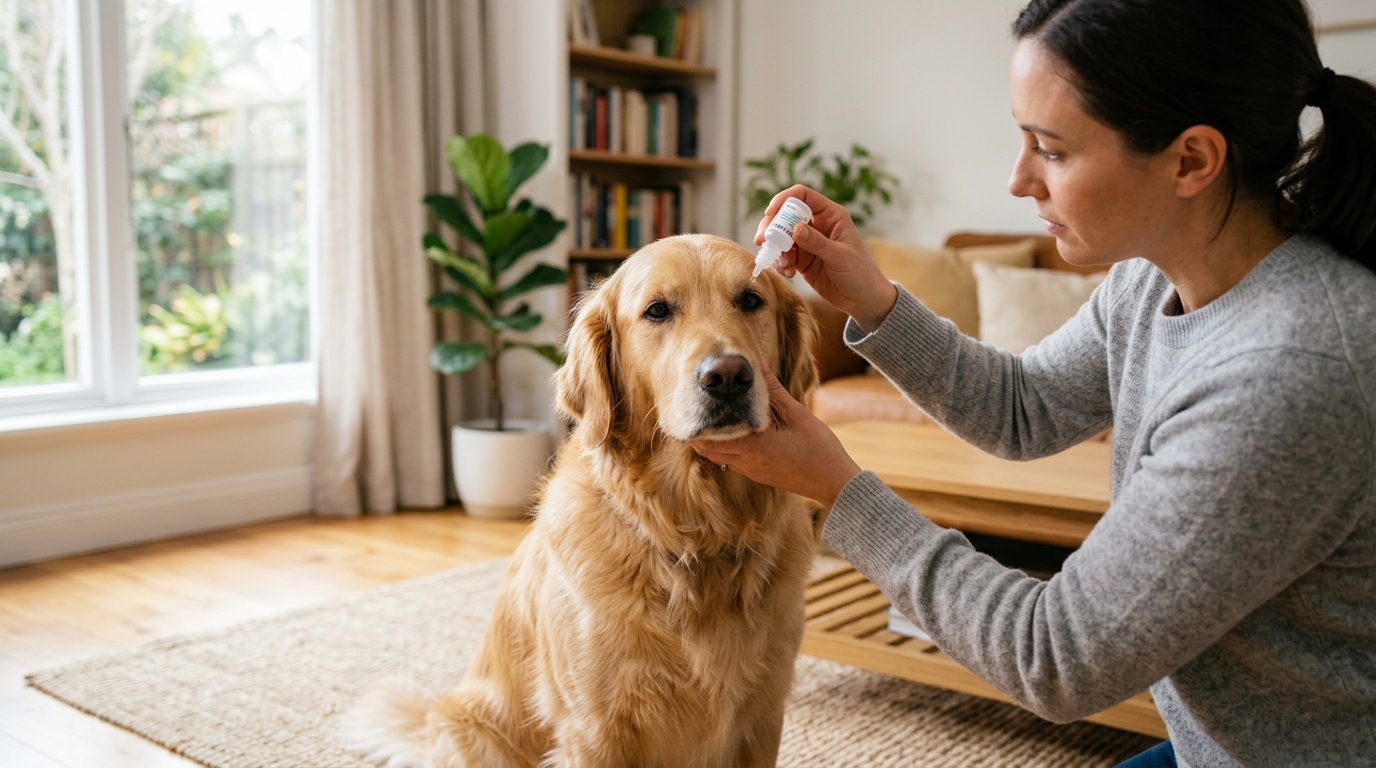
- How to Apply Eye Drops to a Dog
- When to See a Veterinarian
- FAQ
Why Dogs Need Eye Drops
A dog’s eyes face the world at ground level. Dust, grass seeds, pollen, and wind hit them all day long. Healthy eyes wash most of this away with tears, but sometimes the eye needs help. That is where eye drops come in.
Eye drops for dogs fall into two broad groups. The first group is non-medicated rinses and lubricants. These flush debris, moisten the surface of the eye, and help maintain normal comfort. The second group is medicated drops prescribed by a veterinarian for specific diagnosed conditions such as bacterial conjunctivitis, glaucoma, or dry eye (keratoconjunctivitis sicca). Medicated drops should only ever be used under veterinary direction, because the wrong medication can seriously damage an eye.
Common Causes of Eye Irritation in Dogs
Understanding the cause helps you choose the right response. Common triggers include:
- Environmental debris: dust, sand, plant material, or wind exposure, especially in dogs that ride with their head out the car window.
- Allergies: pollen, mold, and dust mites can leave eyes watery and mildly red.
- Tear staining and normal discharge: small amounts of clear or light brown “eye boogers” are normal in many breeds. We cover this in detail in our article on sudden eye boogers in dogs.
- Dry eye: some dogs do not produce enough tears, leaving a sticky, thick discharge.
- Infections and injuries: scratches, ulcers, and bacterial or viral infections cause pain, squinting, and colored discharge. These always need veterinary care.
- Breed anatomy: flat-faced breeds like Pugs and Shih Tzus, and breeds with droopy lids, are more prone to irritation.
Types of Dog Eye Drops Compared
Here is how the main categories compare:
| Type | What it does | Prescription needed? | Best for |
|---|---|---|---|
| Sterile saline rinse | Flushes dust and debris from the eye surface | No | Quick flushing after dusty walks |
| Daily eye-cleansing rinse | Gently cleans the eye area, supports comfort, helps manage tear-stain buildup | No | Routine daily eye hygiene |
| Lubricating (artificial tears) | Moistens the eye surface | No, but ask your vet first | Mild dryness, post-grooming irritation |
| Antibiotic drops | Used by veterinarians for diagnosed bacterial infections | Yes | Diagnosed infections only |
| Steroid or glaucoma drops | Manage inflammation or eye pressure under veterinary care | Yes | Specific diagnosed conditions |
Important: never use human redness-relief drops (such as those containing tetrahydrozoline) or leftover human prescription drops on a dog. Steroid drops used on an undiagnosed scratched cornea can lead to serious complications.
Safe At-Home Eye Care
For everyday situations, a simple routine supports healthy, comfortable eyes:
- Check daily. Look for redness, squinting, cloudiness, or discharge during your normal cuddle time.
- Wipe gently. Use a soft, damp cotton pad to remove crust from the corner of the eye, wiping away from the eye.
- Rinse when needed. A sterile saline or a gentle daily eye-cleansing rinse helps flush out dust and pollen after outdoor time.
- Trim hair around the eyes. This reduces irritation and keeps discharge from building up.
- Support overall health. Balanced nutrition and routine grooming both promote normal eye comfort. Our full dog eye care guide covers the complete routine.
Ingredients to Look For and Avoid
Look for: sterile water or saline base, gentle pH-balanced formulas, and soothing botanical ingredients such as chamomile or eyebright that are commonly used in pet eye rinses. Single-purpose, fragrance-free formulas are safest.
Avoid: alcohol, added fragrance, hydrogen peroxide, human redness-relief agents, and any product that does not clearly state it is safe for use around a dog’s eyes. When in doubt, ask your veterinarian before applying anything to the eye itself.
FROM PURE MAJESTY PETS
Soothing Daily Eye Cleansing Rinse
A gentle, pH-balanced rinse formulated to support clean, comfortable eyes. Helps flush away dust and pollen, supports management of tear-stain buildup, and fits easily into a daily wellness routine for all breeds.
- Gentle enough for daily use
- Formulated to support normal eye comfort
- Easy applicator for at-home routines
How to Apply Eye Drops to a Dog
- Wash your hands and have treats ready.
- Gently clean away discharge with a damp cotton pad first.
- Stand behind or beside your dog rather than approaching head-on.
- Tilt the chin slightly upward and rest the hand holding the bottle on your dog’s head so it moves with them.
- Squeeze the recommended number of drops onto the eye without touching the tip to the eye or lashes.
- Let your dog blink, then reward generously so the next time is easier.
When to See a Veterinarian
Home care has limits. Contact your veterinarian the same day if you notice squinting or pawing at the eye, a visibly cloudy or blue-tinged cornea, green or yellow discharge, a swollen or bulging eye, unequal pupil sizes, or any suspected injury. Eye problems in dogs can progress quickly, and early treatment protects vision.
Frequently Asked Questions
Can I use human eye drops on my dog?
Plain sterile saline is generally acceptable for flushing, but human medicated drops, including redness relievers and steroid or antibiotic drops, should never be used on dogs without explicit veterinary direction.
What eye drops are safe for dogs without a prescription?
Sterile saline rinses, veterinary eye-cleansing rinses, and lubricating artificial tears made for pets are generally safe for healthy eyes. Confirm with your veterinarian if your dog has any existing eye condition.
How often can I rinse my dog’s eyes?
A gentle, pH-balanced cleansing rinse made for dogs can typically be used daily as part of a grooming routine. Follow the label directions of the specific product you choose.
Why does my dog have goopy eyes in the morning?
A small amount of crust or clear discharge after sleep is normal for many dogs. A sudden increase, color change, or odor can signal a problem and is worth a veterinary check.
Do eye rinses help with tear stains?
Daily cleansing helps manage the moisture and debris that contribute to tear-stain buildup, especially in light-coated breeds. Persistent heavy staining should be evaluated by your veterinarian to rule out underlying causes.
Ready to build a simple daily eye-care routine? Try the Soothing Daily Eye Cleansing Rinse from Pure Majesty Pets and pair it with the steps in our complete dog eye care guide.
Veterinary disclaimer: This article is for educational purposes only and is not a substitute for professional veterinary advice, diagnosis, or treatment. Always consult your veterinarian about your dog’s eye health, especially before using any product in or around the eyes.
Affiliate disclosure: Dog Health Insider may earn a commission on qualifying purchases made through links on this page, at no extra cost to you. We only feature products we believe support canine wellness.
Sources
- Merck Veterinary Manual: Eye Discharge in Dogs
- American Kennel Club: Eye Drops for Dogs
- American College of Veterinary Ophthalmologists: Common Eye Conditions
- PubMed: Keratoconjunctivitis sicca in dogs – prevalence and treatment review
Before reaching for any drops, check our guide to dog pink eye — the wrong drop on an ulcerated cornea is a real risk.
Never use steroid drops on a suspected dog eye ulcer.
UK readers: see our guide to dog eye drops in the UK for what is prescription-only there.