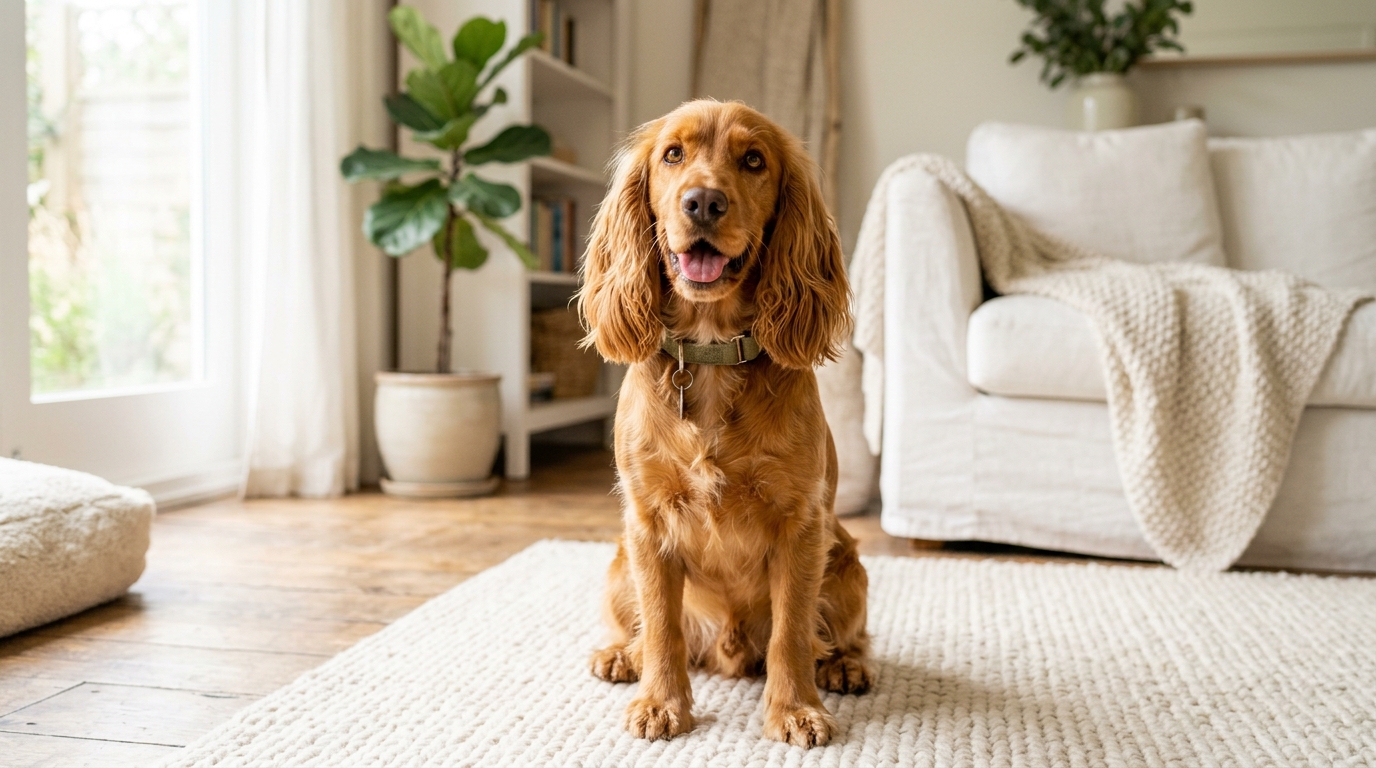
Good dog ear care comes down to three things: knowing what a healthy ear looks like, cleaning on a sensible schedule with a proper ear cleaner, and recognising the point where home care stops and a veterinary appointment starts. Most ear problems in dogs are not primary infections — they are the visible result of an underlying cause such as allergy, moisture, anatomy or a foreign body, which is why cleaning alone often fails to fix a recurring ear.
Quick answer
Check your dog’s ears weekly. Clean only when there is visible wax or after swimming — over-cleaning irritates the canal. Use a purpose-made dog ear cleaner, never cotton buds down the canal, and never home vinegar or alcohol mixes, which the Merck Veterinary Manual specifically warns can worsen swelling and discharge. Head shaking, odour, redness or pain means book the vet, not another clean.
What’s in this guide
- How a dog’s ear is built, and why it matters
- What a healthy ear looks like
- Causes and risk factors
- Signs to watch for
- Ear care options, ranked by evidence
- The safe at-home cleaning routine
- Ear cleaner ingredients explained
- Cost and time expectations
- Common owner mistakes
- When to see your veterinarian
- FAQ
How a dog’s ear is built, and why it matters
A dog’s ear canal is not a straight tube like ours. It runs downward from the opening and then turns sharply inward, forming an L shape. Two consequences follow, and they explain almost everything about dog ear care.
First, debris and moisture that get into the canal do not simply fall out. They sit at the bend. That is why a dog with wet ears after swimming is at higher risk, and why simply wiping the visible part of the ear does very little.
Second, the vertical section gives you a safe working zone. Fluid poured into the canal and worked in by massaging the base of the ear will travel down and mobilise debris, which the dog then shakes loose — without you ever pushing anything toward the eardrum. Instruments do the opposite: a cotton bud packs wax inward.
Ear shape adds another layer. Drop-eared and heavily haired breeds have less airflow, which keeps the canal warmer and more humid. Breeds with narrow canals, such as Shar Peis, and dogs prone to allergic skin disease sit at higher baseline risk regardless of how careful you are.
What a healthy ear looks like
| Feature | Healthy | Worth investigating |
|---|---|---|
| Inner flap colour | Pale pink, matte | Red, shiny, thickened |
| Wax | Small amount, light tan, waxy | Dark brown crumbs, yellow, or black |
| Smell | Essentially none | Sweet, yeasty or foul odour |
| Handling | Indifferent or enjoys it | Flinches, pulls away, vocalises |
| Behaviour | Occasional scratch | Repeated head shaking, head tilt, rubbing on furniture |
| Discharge | None | Any wet, pus-like or bloody discharge |
If you are unsure what normal wax looks like versus a problem, our photo-led explainer on dog ear wax is a useful reference, and the crumbly coffee-ground appearance that people worry about most is covered in ear mites vs ear wax.
Causes and risk factors
Veterinary dermatologists separate ear disease into predisposing factors, primary causes and perpetuating factors. It is a useful frame for owners, because it explains why the same dog keeps having the same problem.
| Category | Examples | What it means for you |
|---|---|---|
| Predisposing | Drop ears, hairy canals, narrow canals, swimming, humidity | Can be managed with routine and drying, not eliminated |
| Primary causes | Allergic skin disease, food sensitivity, ear mites, foreign bodies (grass seeds), endocrine disease, polyps | This is what has to be diagnosed and addressed, or the problem returns |
| Perpetuating | Bacterial and yeast overgrowth, canal thickening, scarring, middle ear involvement | Requires veterinary treatment; home care will not resolve it |
The practical takeaway: a dog with a fourth ear problem in a year does not have four ear infections. It has one unaddressed primary cause. Allergy is the single most common one in dogs.
Signs to watch for
- Head shaking — the most common early sign, and the one owners most often dismiss. See why dogs shake their heads.
- Scratching at one ear repeatedly, or rubbing the head along carpet and furniture — more on dog scratching ear.
- Odour. A healthy ear smells of nothing much. Our guide to smelly dog ears covers what different odours suggest.
- Discharge or dark buildup that returns within days of cleaning.
- Redness, heat or swelling of the ear flap or canal opening.
- Head tilt, loss of balance or flicking eye movements — these point to the middle or inner ear and are urgent.
- A soft, fluid-filled swelling of the ear flap — an aural haematoma, usually caused by violent head shaking. Read dog ear hematoma before attempting anything at home.
Our detailed symptom breakdown lives in dog ear infection symptoms.
Editor’s pick
Pure Majesty Pets Dog Ear Cleaner
A gentle, pH-appropriate ear cleaning solution formulated to support normal ear hygiene and help maintain a clean, dry canal between veterinary visits. Designed for routine weekly use and after swimming or bathing — the two moments when consistent ear care matters most.
See the Dog Ear CleanerEar care options, ranked by evidence
| Approach | Evidence and veterinary position | Use it for |
|---|---|---|
| Veterinary examination with otoscope and cytology | Strongest. The only way to identify what is actually in the ear and whether the eardrum is intact | Any suspected infection, or any recurring ear |
| Prescription ear medication | Strong. Most products combine an antibiotic, antifungal and anti-inflammatory; the choice depends on cytology | Diagnosed infection only, vet-directed |
| Purpose-made ear cleaning solution | Good. Merck notes topical medication can be inactivated by wax and discharge, so cleaning is a standard first step | Routine hygiene, and preparing the ear before prescribed drops |
| Saline or tris-EDTA flush | Good, vet-directed. Commonly used for flushing the external canal | Under veterinary instruction |
| Drying after swimming and bathing | Sensible and low-risk | Every water-loving dog |
| Vinegar, alcohol or peroxide home mixes | Advised against. Merck warns irritating home remedies can worsen swelling and secretions and increase infection risk | Nothing. Skip these. |
| Ear powders after hair plucking | Advised against. Merck notes powders can form irritating masses in the canal | Nothing |
If you have been searching for a DIY option, please read homemade dog ear cleaner and treating a dog ear infection without a vet first — both explain, honestly, where the limits are.
The safe at-home cleaning routine
How often
For a healthy dog with clean ears, a weekly look and a clean roughly every two to four weeks is plenty. Dogs that swim should have ears dried after every session. Merck notes that cleaning frequency in dogs being treated usually decreases over time, from daily during active treatment down to once or twice weekly as maintenance — so if your vet has you cleaning daily, expect that to taper.
The seven steps
- Look first. If the ear is red, painful, swollen or smells bad, stop and book an appointment. Cleaning an inflamed ear hurts and can push debris deeper.
- Set up outside or in the bathroom. Your dog will shake, and it will go everywhere.
- Fill, don’t dab. Lift the ear flap and squeeze cleaner into the canal until it is visibly full. Do not let the nozzle touch the ear.
- Massage the base for 20–30 seconds. You should hear a squelch. This is the step that does the actual work.
- Let them shake. This brings loosened debris up out of the bend in the canal.
- Wipe what you can see with a cotton pad or gauze — the flap and the entrance only. Never insert a cotton bud into the canal.
- Reward. A treat immediately afterward keeps the next clean easy.
Step-by-step with photos is in how to clean dog ears, and a version aimed at nervous dogs is in how to clean dog ears at home.
Check price on the Dog Ear Cleaner
Ear cleaner ingredients explained
| Ingredient type | What it does | Notes |
|---|---|---|
| Ceruminolytics (e.g. squalene, propylene glycol, docusate) | Break down and loosen wax | The active work of a cleaner; needed for waxy ears |
| Drying agents (e.g. isopropyl myristate, boric acid) | Reduce residual moisture in the canal | Useful for swimmers and drop-eared dogs |
| Tris-EDTA | Alters the bacterial cell envelope, commonly used as a flush | Often used alongside vet-prescribed medication |
| Mild acidifiers | Help maintain the canal’s normal surface environment | Should be gentle; harsh acids irritate |
| Soothing agents (aloe, glycerin) | Reduce the sting and help tolerance | Improves compliance, which matters |
| Alcohol, high concentrations | Dries fast but stings badly | Avoid in any inflamed or ulcerated ear |
One rule matters more than any ingredient: if your veterinarian has any doubt about whether the eardrum is intact, do not put anything in the ear without asking first. Some cleaners are not safe if the tympanic membrane is ruptured. Our roundups of the best dog ear cleaner and dog ear cleaning solutions compare formulas side by side.
Cost and time expectations
| Item | Realistic expectation |
|---|---|
| A routine clean | 3–5 minutes once your dog is used to it |
| Bottle of ear cleaner | Roughly $12–$25, typically 2–4 months for one dog |
| Vet visit for an ear | Consultation plus cytology; often prescription drops on top |
| Time to improve, treated infection | Usually days to a couple of weeks; recheck matters |
| Recurring ears | Expect an allergy workup — months, not days |
| What routine cleaning does | Maintains hygiene and removes debris. It does not resolve infection. |
Common owner mistakes
- Cotton buds in the canal. They compact wax against the eardrum and can cause real damage.
- Over-cleaning. Daily cleaning of a healthy ear strips the canal and provokes inflammation. More is not better.
- Vinegar and peroxide recipes. Popular online, explicitly warned against by Merck.
- Wiping instead of filling. You are cleaning the part of the ear that was never the problem.
- Stopping prescribed drops when it looks better. The most common reason infections rebound. Finish the course and go to the recheck.
- Reusing leftover drops from last time. The organism may be different, and the drops may be wrong or expired. Cytology exists for a reason.
- Ignoring the pattern. Recurring ears in the same dog are a symptom of something else — usually allergy.
- Treating a head tilt at home. That is a middle or inner ear sign. Same-day vet.
For what treatment actually involves once a diagnosis exists, see dog ear infection treatment and our overview of dog ear drops.
When to see your veterinarian
Same day if you see a head tilt, loss of balance, circling, flicking eye movements, sudden deafness, severe pain, or a rapidly swelling ear flap.
Within a few days for odour, discharge, persistent head shaking, redness, a painful ear, or anything that looks like ear mites — which are common in puppies and need a confirmed diagnosis before treatment.
Book a longer conversation if this is the third ear problem in twelve months. At that point the useful question is not “which drops” but “why does this keep happening”, and the answer is usually allergic skin disease, food sensitivity, or an anatomical factor that needs a plan.
View Pure Majesty Pets Dog Ear Cleaner
Frequently asked questions
How often should I clean my dog’s ears?
For a healthy dog, look weekly and clean roughly every two to four weeks, or whenever you can see wax buildup. Dogs that swim should have their ears dried after every session. Cleaning a healthy ear daily is counterproductive and can irritate the canal. If your veterinarian has prescribed a cleaning schedule during treatment, follow that instead.
Can I use hydrogen peroxide or vinegar in my dog’s ears?
No. The Merck Veterinary Manual specifically advises against irritating home remedies such as vinegar mixtures, noting they can worsen swelling and secretions and increase the risk of infection. Use a purpose-made dog ear cleaner instead, and never put anything in an ear that is painful or inflamed without veterinary advice.
Why do my dog’s ears smell bad?
A healthy ear has almost no smell. A yeasty or foul odour usually means an overgrowth of yeast or bacteria in the canal, which is a veterinary matter rather than something a cleaner will fix. It is also a strong hint that there is an underlying cause, most often allergic skin disease.
How do I know if it is ear mites or just wax?
You cannot reliably tell by looking. Ear mite debris is often described as dark and crumbly like coffee grounds, but yeast and bacterial infections can look similar. The only accurate answer comes from a veterinarian examining a sample under a microscope, and treating for mites that are not there wastes time.
Is it safe to pluck the hair from my dog’s ears?
This is debated among veterinarians and is not automatically beneficial. Plucking can inflame the canal, and Merck notes that powders applied after plucking can form irritating masses. If your dog has very hairy canals and recurring problems, ask your vet or groomer whether plucking is appropriate for that individual dog.
My dog shakes his head but the ears look clean. Is that normal?
Persistent head shaking is not normal even if the visible ear looks fine. The problem is often deeper in the canal than you can see, and a grass seed or early inflammation is a common cause. It also risks an aural haematoma, so it is worth a veterinary look rather than watching and waiting.
Can I treat a dog ear infection at home?
You can support the ear with hygiene, but you cannot diagnose or resolve an infection at home. Identifying whether the problem is bacterial, fungal, parasitic or a foreign body requires an otoscope and cytology, and using the wrong product can make things worse or damage a ruptured eardrum.
Does ear cleaner sting?
A gentle, correctly formulated cleaner should not sting a healthy ear. If your dog reacts strongly, it usually means either the formula is too harsh, or the ear is already inflamed and needs veterinary attention rather than cleaning.
Sources
- Merck Veterinary Manual. Otitis Externa in Animals. merckvetmanual.com
- Merck Veterinary Manual. Ear Infections and Otitis Externa in Dogs (Dog Owners). merckvetmanual.com
- Merck Veterinary Manual. Otitis Media and Interna in Animals. merckvetmanual.com
Veterinary disclaimer
Dog Health Insider publishes educational content for dog owners. It is not veterinary advice, and no article here is a substitute for an in-person examination. We do not have a veterinarian on staff. Always talk to your own veterinarian before starting, stopping or changing anything in your dog’s care, especially if your dog is on medication, pregnant, or has a diagnosed condition.
Affiliate disclosure: some links on this page go to Pure Majesty Pets, and we may earn a commission if you buy through them. This never changes what we recommend or what the research says.
Last updated: August 5, 2026 · Author: Dog Health Insider Editorial Team
In the UK? Prices, availability and label rules differ — see our UK guide to choosing a dog ear cleaner.