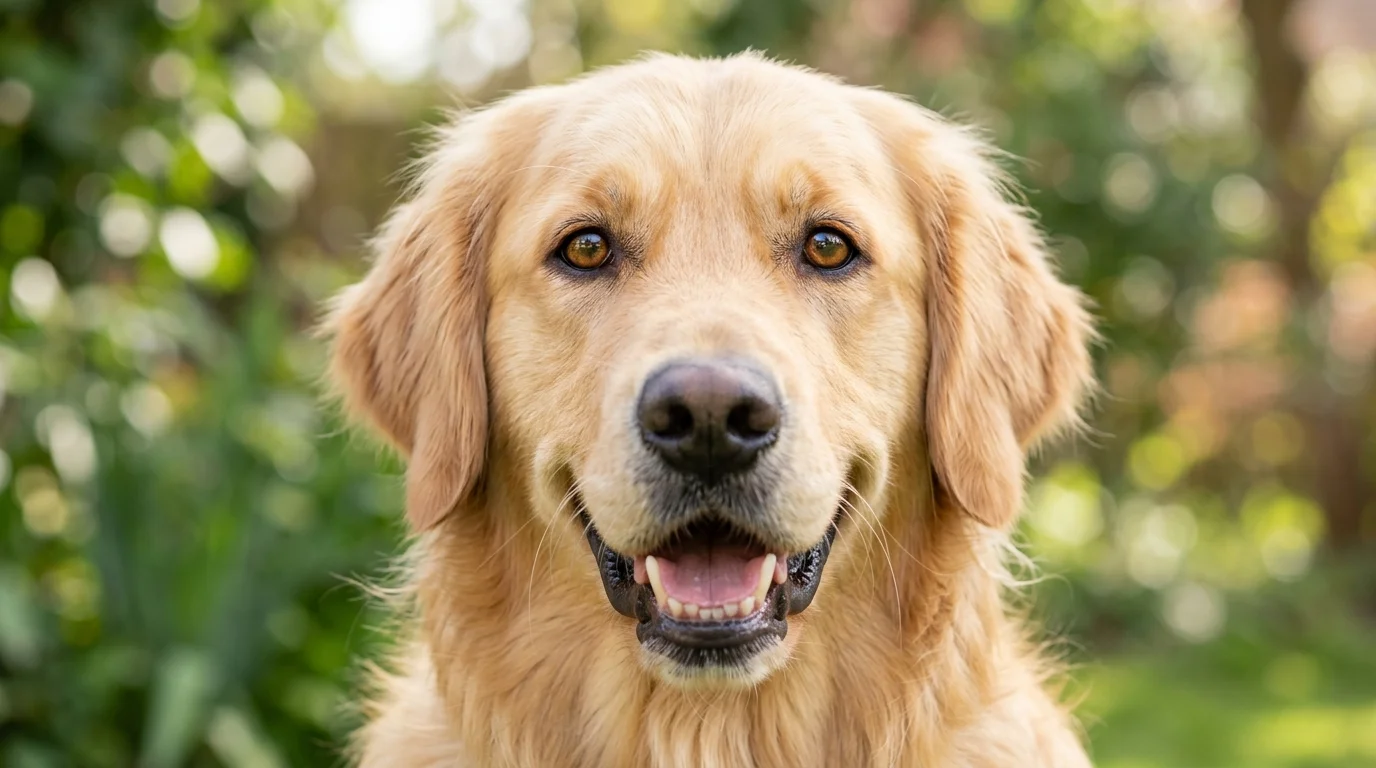
There are four main types of dog eye infections: conjunctivitis, infected corneal ulcers (keratitis), eyelid infections like blepharitis and a stye, and herpesvirus eye disease. Plenty of red eyes aren’t infections at all, and the ones that aren’t are often the more urgent. This guide shows you how to tell which is which, and when to stop reading and get in the car.
Last updated: 18 November 2026
Disclosure: Dog Health Insider is supported by Pure Majesty Pets, and some links here go to its products. This is general information, not a diagnosis.
- Go to the vet now, or wait?
- The four types of dog eye infection
- The look-alikes
- What sets them off
- What discharge can and can’t tell you
- What you can do at home
- Our eye rinse
- FAQ
- Sources
Go to the vet now, or can it wait?
Start here, because the type of infection matters less than how fast the eye needs looking at. Head to your vet today, or an after-hours emergency clinic, if you see any of these:
- Sudden squinting, or an eye held shut
- A cloudy or bluish cornea
- A visible crater or white spot
- One pupil bigger than the other, or a very large pupil
- A firm, bulging eye
- Obvious pain, or your dog suddenly acting differently
- Any knock, scratch or suspected grass seed
Deep ulcers and glaucoma can threaten an eye fast. Rinsing it at home first just burns time. If your dog is bright and comfortable with a bit of redness or discharge, a booking within a day or two is reasonable. If it hangs around, keeps coming back or your dog paws at it, move that booking up.
Once your vet has cleared the eyes, our Eye Cleansing Rinse is made for gentle daily wiping of surface debris and tear residue. It never replaces an exam.
What are the four main types of dog eye infection?
1. Conjunctivitis
This is inflammation of the conjunctiva, the pink lining around the eye. Expect redness, puffy tissue around the cornea, discharge and mild discomfort. The Merck Veterinary Manual says that when both eyes are affected, the cause is often viral or bacterial, with irritants and allergens close behind. One eye only? Think foreign body, tear-sac inflammation or dry eye first.
Is conjunctivitis always an infection? No. Bacteria are sometimes opportunists that move in after the lining was already weakened, so antibiotics alone may not fix the eye if the cause is still there.
2. Infected corneal ulcers (keratitis)
The cornea is the clear window at the front of the eye. Ulcers here mostly start with injury: a claw, a stick, a chemical, or a grass seed lodged under the lid. Infection usually follows the damage, not the other way round.
Watch for a watering eye, rapid blinking, an uneven or swollen cornea, and sometimes dense white material at the edge. A shallow ulcer usually recovers in about a week on vet-prescribed drops. A deep one can bulge or rupture and often needs surgery. Ulcers caught late are more likely to progress.
3. Eyelid infections: blepharitis and stye
Blepharitis is an inflamed lid. Merck lists spread from skin or conjunctival inflammation, an infected lid gland (a stye), irritants such as plant oils or sunlight, and fungal, mite or bacterial infection. Immune disease such as pemphigus can be behind it as well.
4. Canine herpesvirus eye disease
Canine herpesvirus-1 can cause lid inflammation, conjunctivitis and keratitis in adult dogs. A 2025 review calls conjunctivitis the most common sign. Healthy adults usually have mild disease or none. Dogs with weak immune systems get longer, more severe illness.
Which red eyes look like infections but aren’t?
Many “types of eye infection” lists include these as if they were infections. They aren’t, and a few of them are emergencies. Use the table to see how the real infections and the look-alikes line up.
| Condition | Infection? | Typical signs | Urgency |
|---|---|---|---|
| Conjunctivitis | Sometimes | Redness, swelling, discharge | Within 1 to 2 days |
| Blepharitis and stye | Often | Swollen, sore eyelid | Within 1 to 2 days |
| Infected corneal ulcer | Yes | Watering, winking, uneven cornea | Same day |
| Herpesvirus (CHV-1) | Yes | Conjunctivitis, keratitis | Within 1 to 2 days |
| Dry eye (KCS) | No | Thick discharge, worse in the morning | Book a visit |
| Uveitis | No | Small pupil, light sensitivity | Same day |
| Glaucoma | No | Cloudy cornea, big pupil, firm eye | Emergency |
Dry eye is most often the immune system damaging the tear glands, and it usually needs long-term, often lifelong medication such as cyclosporine plus artificial tears. Merck’s professional manual says 30 to 40 percent of dogs develop it after surgery to remove a prolapsed third-eyelid gland, the problem covered in our cherry eye guide.
Uveitis is inflammation inside the eye. In one eye it is usually trauma. In both eyes, infectious or immune causes such as leptospirosis or toxoplasmosis become more likely, and it can lead to glaucoma or cataract.
Glaucoma is pressure damage inside the eye. The sudden form brings severe pain, redness and vision loss, with a large pupil, a cloudy cornea and a firm eyeball. Merck says any sign of glaucoma means a vet visit immediately.
What sets eye infections off in Australian dogs?
Injury is the big one, since most corneal infections start with a scratch. In practice that means grass seeds in summer and autumn, sticks, bush scrub, windy dust and a bit of rough play at the dog park. Beach sand and salt can irritate an eye too, though irritation is not the same thing as infection.
Then come lid and lash problems, dry eye, viruses and whole-body illness. Entropion, where the lid rolls inward, is a common inherited defect that fuels repeat conjunctivitis. Flat-faced breeds and dogs with dry eye are prone to deep tissue loss once a corneal infection takes hold.
Can you tell the type from the discharge?
Not reliably. Merck says the look of the conjunctiva “usually is not enough, by itself, to allow your veterinarian to diagnose the cause”, and the work-up can include scrapings and a tear test. Yellow or green goop may point toward bacteria, but clear tearing can still come with something serious. Describe what you see, take a photo, and let the vet do the sorting. To separate allergy from infection, see how allergies and infections differ in the eye, and for everyday crust, what normal eye boogers look like.
At the clinic, the vet will usually use a dye to find any lost surface on the cornea and a Schirmer test to measure tears. In one 2023 study healthy dogs measured about 15 mm per minute or higher and dry-eye dogs 14 or lower, although clinics use their own cutoffs. For the usual prescriptions, read how dog eye infections are treated, and whether it is really pink eye.
What can you do at home?
Hygiene and protection only. Can a dog eye infection clear on its own? A mild irritation sometimes settles, but you can’t tell it from an early ulcer by looking.
- Wipe crust and tear residue gently with a clean, soft cloth, using a fresh patch each time.
- Keep the cone on if your vet gave you one, so paws can’t rub the eye.
- Once your vet has cleared the eyes, dog eye wipes are an option for daily wiping.
Leave the human eye drops, leftover prescription drops and anything labelled for redness in the cupboard, and skip kitchen remedies for eye discharge too. Steroids are unsafe when an ulcer is present, and only the vet’s dye test shows one. Tea bags, vinegar and hydrogen peroxide don’t belong near an eye.
How do the care options compare?
| Option | What it is for | Okay when |
|---|---|---|
| Vet-prescribed drops or ointment | Addressing the diagnosed cause | Prescribed after an exam |
| Sterile saline | Flushing loose dust or sand | The eye is comfortable and vet-cleared |
| Daily eye rinse (like ours) | Hygiene around the eyes: debris and tear residue | The eyes are vet-cleared and your dog is comfortable |
| Human drops or kitchen remedies | Not made for dogs | Avoid, especially if the eye is red or sore |
Which Pure Majesty Pets product fits?
For routine care around healthy, vet-cleared eyes, the Pure Majesty Pets Eye Cleansing Rinse is a fragrance-free, non-medicated formula with a pH of 7.0 to 7.2, made for routine debris, eye-area hygiene and tear-stain care. Per gram it includes 80 mg aloe leaf juice and 20 mg chamomile extract for a gentle, soothing feel, with glycerin and sodium hyaluronate to help keep the skin around the eye moisturised.
It is formulated to support routine cleaning after beach days and dusty walks. The 120 mL bottle is made in North America, and shipping is free worldwide. It does not treat infections, ulcers, dry eye, uveitis or glaucoma, and it is not the first step for a painful, cloudy, squinting or injured eye.
FAQ
Can my dog catch an eye infection from another dog?
Sometimes. Allergic and dry-eye problems aren’t contagious, but viral or bacterial causes may spread, so ask your vet about keeping dogs apart and wash your hands afterwards.
Will a dog eye infection go away by itself?
A mild irritation may settle. But it looks the same as an early ulcer, and ulcers found late are more likely to progress, so get it checked.
How urgent is a squinting dog?
Very. Squinting, cloudiness, a crater, uneven pupils or any injury means the same day, including after-hours if that’s when it happens.
Which type of eye infection is most common?
No reliable ranking is published, and we won’t make up a percentage. Conjunctivitis is the best known, but it has many causes, so the exam matters more than the label.
Can I use human eye drops?
No. Steroid drops are unsafe if an ulcer is present, and you can’t rule one out at home. Use only what your vet prescribes.
When to talk to your vet
This article is general education and not a diagnosis. Any dog with squinting, cloudiness, swelling, a red and painful eye, an injury or discharge lasting more than a day or two should see a vet. Daily wellness products, ours included, are not intended to diagnose, treat, cure or prevent disease. Once the vet visit is done, the rinse is here for everyday eye hygiene.
Sources
- Merck (owner): Disorders of the Conjunctiva in Dogs
- Merck (owner): Disorders of the Cornea in Dogs
- Merck (owner): Disorders of the Eyelids in Dogs
- Merck (owner): Disorders of the Anterior Uvea in Dogs
- Merck (owner): Glaucoma in Dogs
- Merck (professional): Nasolacrimal and Lacrimal Apparatus
- Merck (professional): Conjunctiva
- Merck (professional): Deep Stromal Corneal Ulcers and Descemetocele
- PubMed Central: 2023 Schirmer tear test study
- PubMed Central: Canine herpesvirus-1 review, November 2025