Dog Health Insider Editorial Team — Last updated: June 9, 2026
Some links below are affiliate links. If you buy through them we may earn a small commission at no extra cost to you. This helps support our free content.
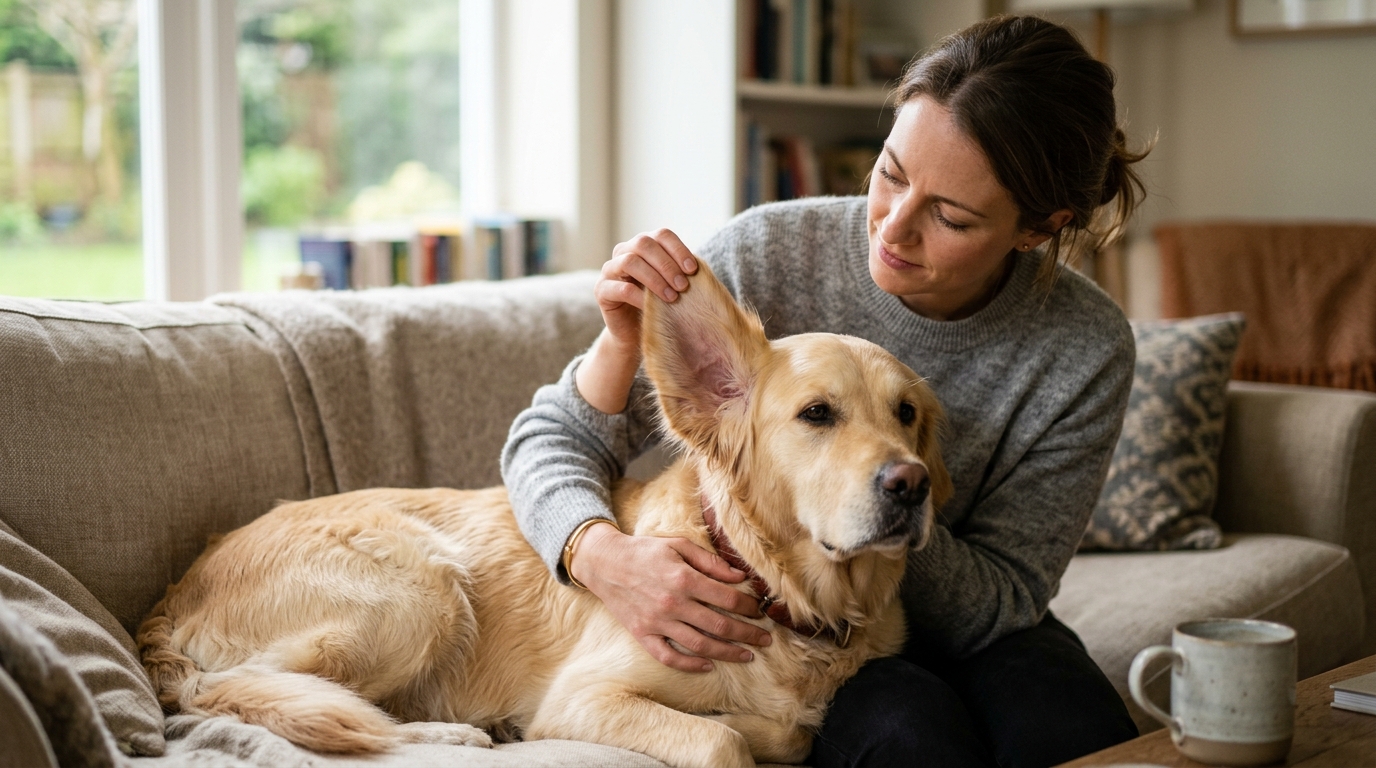
If your dog is shaking their head or scratching at one ear, it is natural to search for how to treat a dog ear infection without a vet. The honest answer matters here: true ear infections need a veterinary diagnosis, but there is a lot you can safely do at home to support ear comfort, spot problems early, and lower the chance of them coming back. This guide walks through both.
Related guides from Dog Health Insider
Build a gentle home routine. The Pure Majesty Pets Dog Ear Cleaner is formulated to support normal ear hygiene between vet visits.
See the Dog Ear Cleaner →Table of contents
- What a dog ear infection actually is
- Common causes
- What you can safely do at home
- When you must see a vet
- Ingredients and habits that support ear health
- Mild signs vs. signs that need a vet
- Frequently asked questions
- Sources
What a dog ear infection actually is
Most ear infections in dogs happen in the outer ear canal, a condition vets call otitis externa. The canal becomes inflamed and itchy, and an overgrowth of yeast or bacteria often follows. Because those organisms respond to different medicines, guessing at home can waste time and let the problem dig in deeper.
That is why the goal of home care is not to replace the vet. It is to support everyday ear comfort and hygiene, and to catch trouble early. For the bigger picture, see our complete dog ear care guide.
Common causes
- Allergies: Food and environmental allergies are a leading reason ears stay itchy and inflamed.
- Moisture: Water left in the canal after baths or swimming creates a warm, damp spot where microbes thrive.
- Yeast and bacteria: These normally live in small numbers but can overgrow when the ear environment changes.
- Ear mites: More common in puppies, mites cause intense itch and dark, crumbly debris.
- Anatomy: Floppy ears and hairy canals hold in heat and moisture.
Since allergies and yeast often drive both ear and skin problems, it can help to read about yeast-related itching in dogs.
What you can safely do at home
For mild, early irritation — or alongside a treatment plan your vet has approved — these gentle steps may help support ear comfort:
- Keep ears dry. After baths and swims, gently dry the outer ear and let the canal air out.
- Clean gently and routinely. Use a soft, alcohol-free, vet-appropriate ear cleaner to help remove wax and debris. Read how to clean dog ears at home and our guide to choosing a dog ear cleaning solution.
- Support skin and allergy care. Work with your vet on diet and allergy management, since itchy ears often start with allergies.
- Watch closely. Check the ears every few days for redness, odor, or discharge so you can act early.
These steps support hygiene and comfort. They are not a cure for an active infection, and they should never be used to delay needed veterinary care.
Make routine ear care easy. The Pure Majesty Pets Dog Ear Cleaner is formulated to support normal ear hygiene and help keep ears fresh.
Check price on the store →When you must see a vet
Some signs mean home care is not enough. Contact your veterinarian promptly if you notice:
- Obvious pain, whining, or pulling away when the ear is touched
- Red, swollen, or hot ear flaps or canal
- Dark, yellow, or bloody discharge, or a strong, sour smell
- A head tilt, loss of balance, or rapid eye movements
- Ear problems that keep coming back despite good home care
These can point to a deeper infection, a ruptured eardrum, or an underlying allergy that needs a proper plan. Catching it early is almost always easier and cheaper than waiting.
Ingredients and habits that support ear health
When choosing a routine cleaner, look for gentle, soothing ingredients such as aloe or glycerin, and a pH balanced for dogs. Avoid high-alcohol formulas that can sting an already-irritated ear. Pair good products with simple habits: dry ears after water, trim excess inner-ear hair if your groomer recommends it, and keep up with allergy care.
Mild signs vs. signs that need a vet
| What you see | What it may mean | Recommended action |
|---|---|---|
| Slight wax, occasional scratch | Normal buildup | Gentle routine cleaning, keep dry |
| Mild redness after a swim | Moisture irritation | Dry the ear, monitor for 24–48 hours |
| Strong odor, dark discharge | Possible infection | See your veterinarian |
| Pain, swelling, head tilt | Deeper or inner-ear problem | See your veterinarian promptly |
Pure Majesty Pets — Dog Ear Cleaner
A gentle, alcohol-free cleaner formulated to support normal ear hygiene. Used as part of a regular routine, it helps remove wax and debris, helps keep the canal dry after baths and swims, and may help reduce everyday ear odor — a smart companion to the care plan your vet recommends.
- Gentle feel for sensitive, allergy-prone dogs
- Helps maintain clean, fresh ears between vet visits
- Easy to add to a weekly care routine
Frequently asked questions
Can a dog ear infection go away on its own?
Mild irritation from moisture sometimes settles with good home care, but a true infection rarely clears by itself and usually needs veterinary treatment. Waiting too long can let it spread deeper into the ear.
What can I safely put in my dog’s ear at home?
Stick to a gentle, alcohol-free ear cleaner made for dogs, used for routine hygiene. Avoid hydrogen peroxide, rubbing alcohol, and leftover medications unless your vet specifically tells you to use them.
How can I tell if it is yeast, bacteria, or mites?
You often cannot tell by looking. Vets use a quick swab and microscope to identify the cause, which is why home guessing is unreliable. The right treatment depends on that answer.
How do I stop ear infections from coming back?
Keep ears dry, clean them gently on a regular schedule, and work with your vet on any underlying allergies. Consistent, gentle hygiene supports a healthier ear environment over time.
Is it ever safe to skip the vet?
For very mild, occasional irritation with no pain or discharge, careful home care and watching closely may be reasonable. But repeated, painful, or smelly ears always deserve a veterinary exam.
Sources
- Merck Veterinary Manual — Ear Infections and Otitis Externa in Dogs
- American Kennel Club (AKC) — Dog Ear Infections: Symptoms and Treatment
- American Animal Hospital Association (AAHA) — Otitis and ear-care guidance.
- WSAVA — Companion animal dermatology resources.
Related reading: Complete dog ear care guide · Dog ear cleaning solution guide · How to clean dog ears at home