Dog Health Insider Editorial Team — Last updated: June 9, 2026
Some links below are affiliate links. If you buy through them we may earn a small commission at no extra cost to you. This helps support our free content.
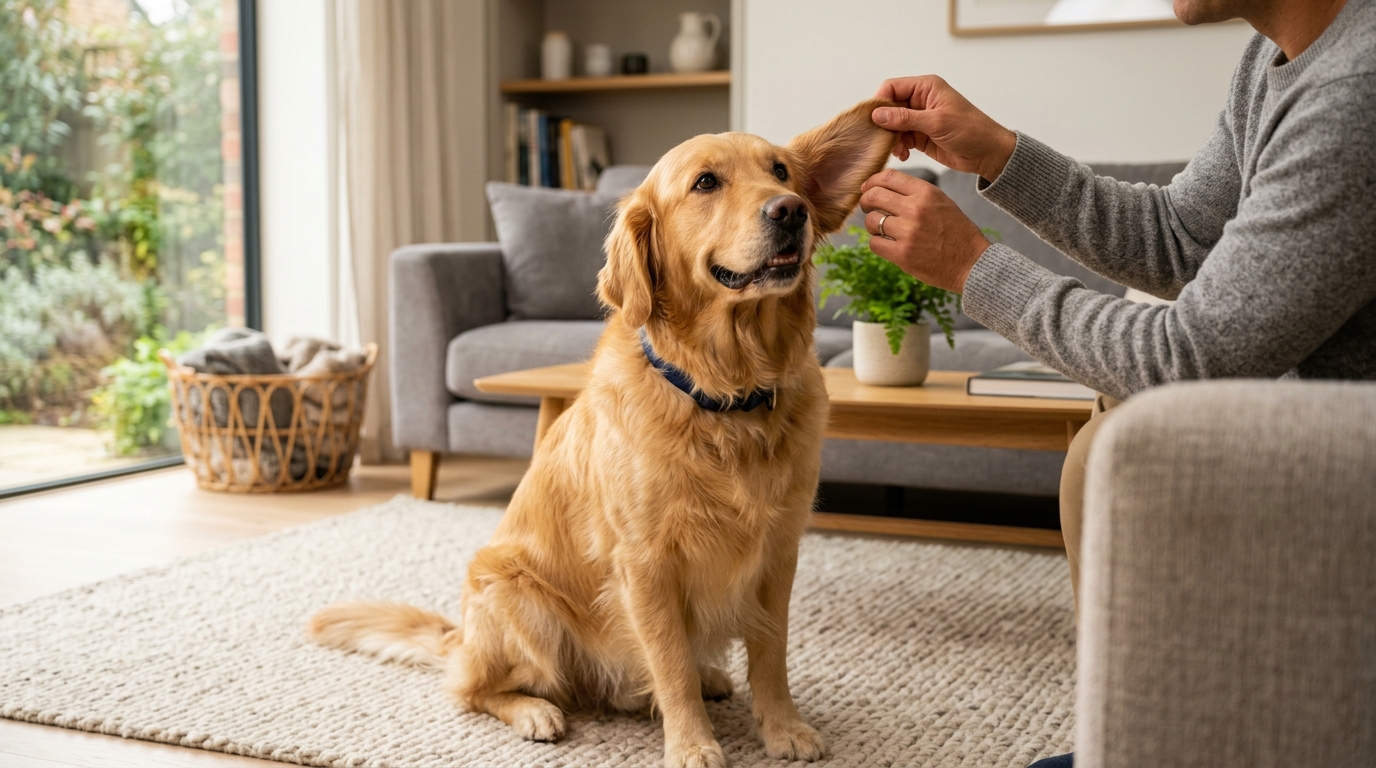
A good dog ear cleaning solution is one of the simplest tools for at-home ear care. Used the right way, it helps remove wax and debris, helps keep the ear canal dry, and supports normal ear hygiene between grooming visits. This guide explains how to choose a safe solution, what ingredients to look for, and how to use one without irritating your dog.
Related guides from Dog Health Insider
Looking for a gentle daily option? The Pure Majesty Pets Dog Ear Cleaner is formulated to support normal ear hygiene.
See the Dog Ear Cleaner →Table of contents
- Why dogs need their ears cleaned
- What causes wax and debris buildup
- How to choose a safe dog ear cleaning solution
- Ingredients to look for (and avoid)
- How to use an ear cleaning solution step by step
- Types of ear cleaning solutions compared
- Frequently asked questions
- Sources
Why dogs need their ears cleaned
A dog’s ear canal is shaped like an L, with a vertical part that drops down before turning toward the eardrum. That shape traps moisture, wax, and dirt more easily than a human ear. Routine cleaning helps clear that buildup before it has a chance to cause odor or itchiness.
Not every dog needs frequent cleaning. Dogs with upright ears and dry canals often stay clean on their own. Dogs with floppy ears, lots of inner-ear hair, or a history of ear trouble usually benefit from a regular, gentle routine. For a full overview, see our complete guide to dog ear care.
What causes wax and debris buildup
Several everyday factors lead to dirty ears:
- Ear anatomy: Floppy or hairy ears hold in warmth and moisture.
- Water exposure: Swimming and baths leave moisture in the canal, which softens wax and invites buildup.
- Allergies: Food and environmental allergies often show up as itchy, waxy ears.
- Excess wax: Some dogs simply produce more earwax than others.
- Mites or microbes: Ear mites, yeast, and bacteria can increase debris and odor and may need veterinary care.
Because itchy, waxy ears and skin allergies often go together, it can help to read about yeast-related itching in dogs as well.
How to choose a safe dog ear cleaning solution
The best everyday solution for most dogs is gentle, alcohol-free, and pH-balanced for canine ears. Look for a product that lists its ingredients clearly and is designed for routine maintenance rather than as a treatment. A maintenance cleaner helps remove wax and debris and helps keep the canal dry — it is not a substitute for veterinary medicine when a real ear problem is present.
Ingredients to look for (and avoid)
Helpful, gentle ingredients:
- Mild cleansing acids (such as lactic or salicylic acid) that help loosen wax and support a healthy ear surface.
- Soothing agents like aloe vera, glycerin, or witch hazel that help calm everyday irritation.
- Light drying agents that help keep the canal dry after swimming or baths.
Ingredients to be cautious with:
- Isopropyl alcohol in high amounts — it can sting and dry the skin, especially if the ear is already irritated.
- Hydrogen peroxide — it can leave moisture behind and irritate delicate tissue.
- Strong fragrances that may bother sensitive dogs.
Want a simple, gentle daily cleaner? The Pure Majesty Pets Dog Ear Cleaner is formulated to support normal ear hygiene and help keep ears fresh.
Check price on the store →How to use an ear cleaning solution step by step
- Get set up. Have the solution, cotton balls or pads, and treats ready. Choose a calm moment.
- Fill the canal. Lift the ear flap and squeeze enough solution to fill the visible canal. Do not push the tip deep inside.
- Massage. Gently rub the base of the ear for 20–30 seconds. You should hear a soft squishing sound as the solution breaks up wax.
- Let them shake. Step back and let your dog shake their head — this brings debris up and out.
- Wipe. Use a cotton ball to wipe the visible part of the ear. Never insert cotton swabs into the canal.
- Reward. Finish with praise and a treat so the routine stays positive.
For a fuller walkthrough with photos, see how to clean your dog’s ears at home. If you suspect a deeper problem, read when an ear issue needs a vet.
Types of ear cleaning solutions compared
| Type | Best for | Pros | Things to watch |
|---|---|---|---|
| Gentle daily cleanser | Routine maintenance, floppy-eared dogs | Mild, alcohol-free, supports normal hygiene | Not a medical treatment |
| Medicated cleanser | Dogs under veterinary care | Targets a diagnosed issue | Use only as a vet directs |
| DIY vinegar & water | Occasional light use | Inexpensive | Can sting; easy to mix wrong; not for irritated ears |
| Ear wipes | Quick outer-ear touch-ups | Convenient, travel-friendly | Only reaches the visible area |
Pure Majesty Pets — Dog Ear Cleaner
A gentle, easy-to-use cleaner formulated to support normal ear hygiene. It helps remove wax and debris, helps keep the canal dry after baths and swims, and may help reduce everyday ear odor as part of a regular routine.
- Gentle, alcohol-free feel for sensitive dogs
- Helps maintain clean, fresh-smelling ears
- Simple to fit into a weekly care routine
Frequently asked questions
How often should I clean my dog’s ears?
For most healthy dogs, about once a week or every other week is plenty. Dogs that swim often or have floppy ears may need it a little more. Over-cleaning can irritate the canal, so let your dog’s ears guide you.
Can I make a homemade ear cleaning solution?
Simple vinegar-and-water mixes are sometimes used for light, occasional cleaning, but they are easy to mix incorrectly and can sting irritated skin. A purpose-made, pH-balanced cleaner is gentler and more predictable for routine care.
What ingredients should I avoid?
Be cautious with high levels of isopropyl alcohol and with hydrogen peroxide, since both can irritate delicate ear tissue or leave moisture behind. Strong fragrances can also bother sensitive dogs.
Is it safe to clean my dog’s ears if they have an infection?
No — if the ear looks red, swollen, painful, or has discharge or a strong smell, stop and see your veterinarian first. Cleaning an inflamed ear on your own can make things worse. A cleaner supports hygiene; it does not replace veterinary care.
How do I know the cleaner is working?
You should see less visible wax, fewer head shakes, and fresher-smelling ears over a few weeks. If buildup or odor keeps coming back, check with your vet to rule out an underlying cause.
Sources
- Merck Veterinary Manual — Ear Infections and Otitis Externa in Dogs
- American Kennel Club (AKC) — How to Clean a Dog’s Ears
- American Animal Hospital Association (AAHA) — Ear care and otitis externa guidance.
- WSAVA — Companion animal dermatology and ear-health resources.
Related reading: Complete dog ear care guide · Choosing a dog ear cleaner · How to clean dog ears at home
In the UK? Prices, availability and label rules differ — see our UK guide to choosing a dog ear cleaner.