By the Dog Health Insider Editorial Team · Last updated: June 6, 2026 · Written and fact-checked against peer-reviewed and veterinary references.
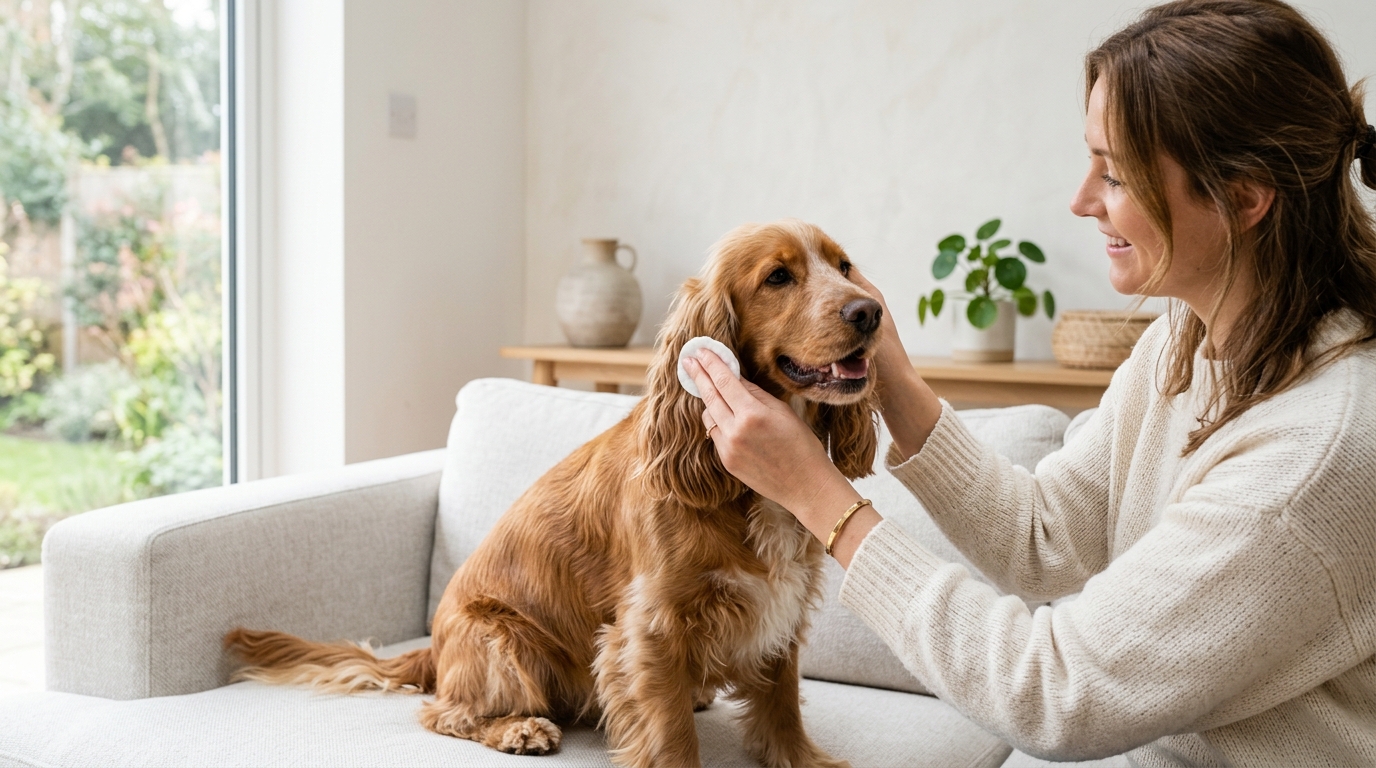
The right dog ear cleaner — used the right way — is one of the simplest habits for supporting healthy, comfortable ears. This guide covers what to look for, what to avoid, and a gentle step-by-step routine, plus the signs that mean it is time to call your veterinarian instead.
Related guides from Dog Health Insider
Does your dog need an ear cleaner?
Some dogs keep their ears tidy on their own; others need regular help. Floppy-eared and water-loving breeds (Cocker Spaniels, Basset Hounds, Labradors, Poodles) trap more moisture and benefit most from routine cleaning. The Merck Veterinary Manual notes that warm, humid ear canals are where problems tend to begin, so gentle, consistent maintenance is the goal — not aggressive over-cleaning, which can irritate a healthy ear.
What to look for (and avoid)
Look for: a pH-balanced, alcohol-free or low-alcohol rinse that helps gently break down wax, ideally with soothing ingredients and a formula designed to help the canal dry. Avoid hydrogen peroxide, undiluted vinegar, and rubbing alcohol — these can sting and irritate. Never use cotton swabs (Q-tips) inside the canal, which can push debris deeper or injure the eardrum.
See a gentle daily dog ear cleaner →
How to clean your dog’s ears, step by step
The AKC and most veterinarians recommend a simple, low-stress method:
- Settle your dog and have cotton balls or gauze ready (never swabs).
- Fill the ear canal with a vet-appropriate cleaner.
- Gently massage the base of the ear for 20–30 seconds — you should hear a soft squish.
- Step back and let your dog shake; this lifts debris up and out.
- Wipe the visible ear and the entrance of the canal with cotton or gauze.
- Reward with a treat. Repeat on the other ear.
For a fuller walkthrough with photos and breed tips, see how to clean your dog’s ears at home.
★ Pure Majesty Dog Ear Cleaner
A gentle, pH-balanced daily rinse that helps lift wax and debris and supports clean, fresh-smelling ears — no harsh alcohol.
- Gently helps remove wax & buildup
- Soothing, alcohol-conscious formula
- Supports routine ear hygiene for floppy-eared breeds
As an affiliate, Dog Health Insider may earn a commission from qualifying purchases. This does not affect our editorial picks.
Cleaner types compared
| Type | What it does | Notes |
|---|---|---|
| pH-balanced rinse | Lifts wax, supports a clean canal | Best all-purpose choice for routine care |
| Drying solution | Helps the canal dry after swims/baths | Good for water-loving dogs |
| Wipes | Surface wipe of the outer ear | Convenient; does not reach the canal |
| Home mixtures (DIY) | Variable | Often too harsh; skip peroxide & alcohol |
Support clean, comfortable ears →
When to see a vet
Routine cleaning supports ear hygiene, but it is not a substitute for veterinary care. Book an exam if you notice a strong odor, a lot of dark or yellow discharge, redness or swelling, head-shaking or scratching, pain when you touch the ear, or any loss of balance. These can signal an ear infection or mites, which need a diagnosis and a tailored plan from your veterinarian — cleaning alone will not resolve them.
Building a simple routine
For most dogs, a gentle clean every 1–2 weeks — and after every swim or bath — is plenty. Over-cleaning a healthy ear can backfire, so let your dog’s ears guide the frequency. Pair cleaning with a quick weekly look inside; catching changes early is half the battle. For the complete picture, read our complete dog ear care guide.
Frequently asked questions
How often should I clean my dog’s ears?
For most dogs, every 1–2 weeks and after swimming or bathing. Floppy-eared breeds may need it more often; ears that look clean and smell neutral need less.
Can I use a dog ear cleaner to treat an ear infection?
No. A cleaner supports routine hygiene but does not treat infection. Odor, discharge, redness, or pain warrant a veterinary visit for a proper diagnosis.
Is it safe to use hydrogen peroxide or vinegar?
These DIY options can sting and irritate the canal and are best avoided. A gentle, pH-balanced cleaner made for dogs is safer for routine use.
Should I use cotton swabs?
Never inside the canal — they can push debris deeper or injure the eardrum. Use cotton balls or gauze on the visible ear only.
★ Pure Majesty Dog Ear Cleaner
Make ear care a 60-second habit — a gentle daily rinse to support clean, fresh, comfortable ears.
- Gentle enough for routine use
- Helps keep floppy ears fresh & dry
Sources
- American Kennel Club (AKC), How to Clean Your Dog’s Ears — akc.org
- Merck Veterinary Manual, Otitis Externa in Dogs.
- American Animal Hospital Association (AAHA), Ear care resources.
- American College of Veterinary Dermatology, Otitis information for pet owners.
⚕ Health note: This article is educational and is not a substitute for professional veterinary advice, diagnosis, or treatment. Pure Majesty Pets products are wellness supplements and grooming aids, not medicines, and are not intended to diagnose, treat, cure, or prevent any disease. Always consult your veterinarian before starting a new product, especially if your dog is pregnant, nursing, on medication, or showing signs of illness.
In the UK? Prices, availability and label rules differ — see our UK guide to choosing a dog ear cleaner.